YouTube Marketing for Dentists: Video Topics That Rank and Convert Patients
Posted on 2/8/2026 by WEO Media |
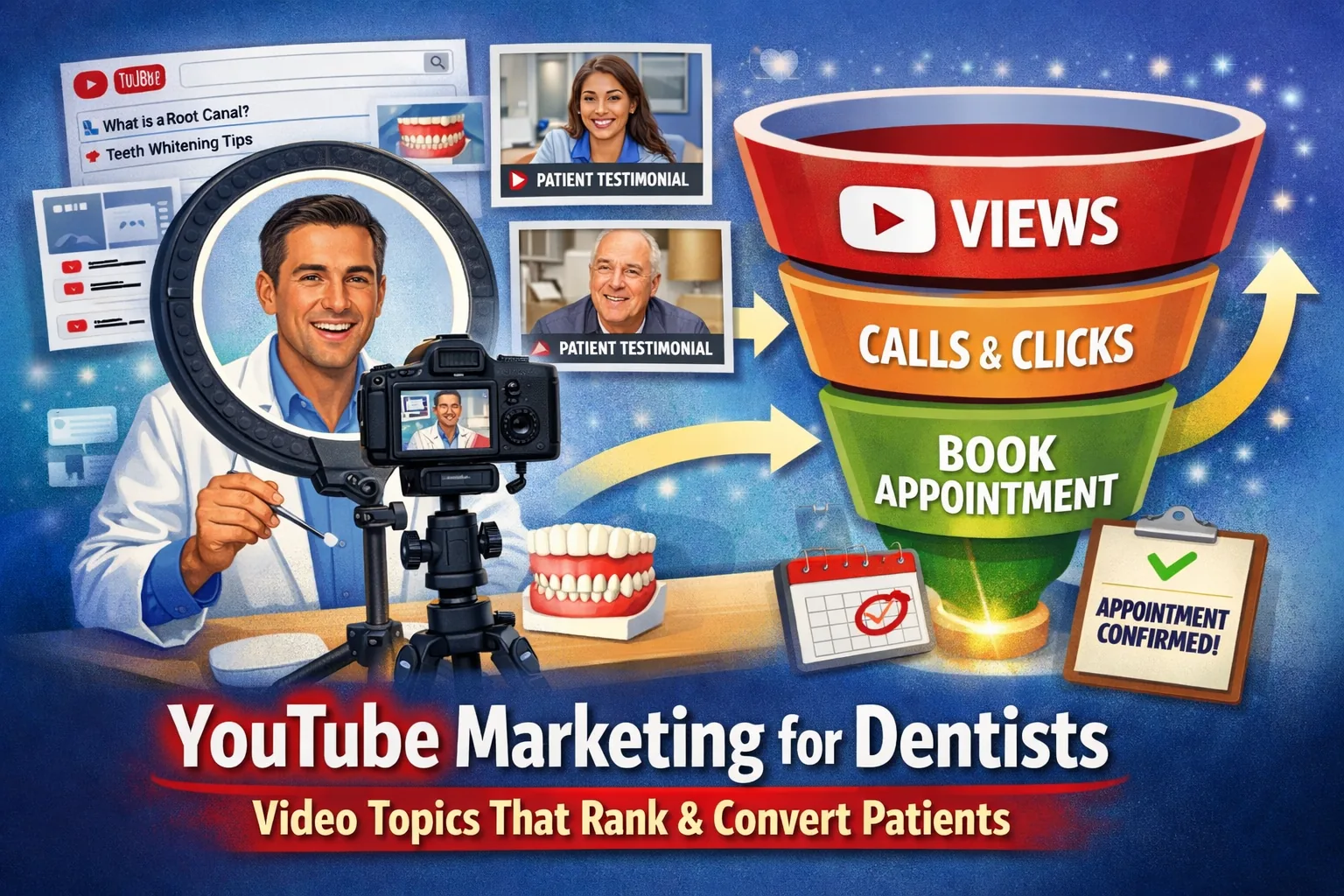 The right YouTube videos bring patients to your practice before they ever pick up the phone. YouTube is widely regarded as the second-largest search engine after Google, and dental-related searches—from “does teeth whitening hurt” to “what happens during a root canal”—generate millions of views every month. When your practice creates videos that answer those searches, you build trust at the exact moment someone is deciding where to book. That combination of search visibility and face-to-face credibility is something no other dental video marketing channel delivers at the same cost. The right YouTube videos bring patients to your practice before they ever pick up the phone. YouTube is widely regarded as the second-largest search engine after Google, and dental-related searches—from “does teeth whitening hurt” to “what happens during a root canal”—generate millions of views every month. When your practice creates videos that answer those searches, you build trust at the exact moment someone is deciding where to book. That combination of search visibility and face-to-face credibility is something no other dental video marketing channel delivers at the same cost.
The opportunity is real, but most dental YouTube channels stall early. They film a generic office tour, post it without optimization, and wonder why nothing happens. The practices that gain traction treat YouTube like a search engine—not a social media platform. They pick topics patients are already searching, structure videos so YouTube surfaces them, and include clear pathways back to the practice. In our work with dental practices across the country, the pattern is consistent: topic selection and search optimization matter more than production quality or posting frequency.
If your practice isn’t generating enough leads overall, start with new patient acquisition strategy first. YouTube works best when it’s layered onto a foundation of strong dental SEO and a website that converts.
Below, you’ll learn which video topics consistently rank in dental searches, how to structure videos for both YouTube and Google results, what equipment you actually need, and how to measure whether your videos are converting viewers into booked appointments—with specific examples, optimization checklists, and topic frameworks you can start using this week.
Written for: dental practice owners, marketing coordinators, and office managers who want to use YouTube to attract new patients and build trust—without spending thousands on production or posting daily.
TL;DR
If you only do five things, do these:
| • |
Pick topics patients are already searching - use YouTube autocomplete and Google’s “People also ask” to find real demand instead of guessing
|
| • |
Answer the question in the first 30 seconds - YouTube measures retention; front-load the value so viewers stay and the algorithm promotes your video
|
| • |
Optimize title, description, and tags for search - treat every upload like an SEO page with a primary keyword, supporting terms, and a clear meta description
|
| • |
Include a specific call to action - tell viewers exactly what to do next (visit a landing page, call your office, book online) and pin it in the comments
|
| • |
Measure what matters - track views → website clicks → calls → booked appointments, not just subscriber count
|
| • |
Stay consistent at a sustainable pace - two well-optimized videos per month outperform ten unoptimized uploads |
Table of Contents
Why YouTube works differently for dental practices
Most dental marketing channels—paid ads, direct mail, even SEO—reach patients as text on a screen. YouTube lets a prospective patient see your face, hear your voice, and watch you explain a procedure before they ever walk through your door. That shifts the first appointment from “stranger meeting stranger” to “I already feel like I know this dentist.” In a field where trust and anxiety are the two biggest barriers to booking, that head start is significant. For a broader look at how video fits into your marketing mix, see our guide to dental video marketing.
YouTube is a search engine, not just a video platform. Google owns YouTube and regularly surfaces YouTube videos in standard search results—especially for “how to,” “what is,” and procedure-related queries. A well-optimized dental video can rank on both YouTube search and Google’s main results page, giving your practice two entry points instead of one. A pattern we commonly see: a single video answering “what to expect during a dental implant consultation” will rank on YouTube within weeks and appear in Google’s video carousel within a few months—driving traffic long after the upload date.
The compounding effect matters. Unlike paid ads that stop generating leads the moment you stop paying, YouTube videos continue to surface in search results for years. A practice that publishes two optimized videos per month for 12 months builds a library of 24 searchable assets—each one working around the clock. Over time, that library becomes a significant source of organic patient acquisition with zero ongoing ad spend.
> Back to Table of Contents
Video topics that rank in dental searches
The biggest mistake practices make is choosing topics based on what they want to talk about rather than what patients are searching for. Ranking on YouTube starts with meeting existing demand. Here are the topic categories that consistently generate search volume and rank well for dental practices.
Procedure explainers
These are the highest-volume dental searches on YouTube. Patients searching “what happens during a root canal” or “dental crown procedure step by step” are actively seeking information—and often actively deciding where to get treatment. These searches overlap directly with patient education video content, making them natural fits for your YouTube channel. The key is specificity: “dental implant surgery step by step” outperforms a generic “dental implants explained” because it matches the exact phrasing patients use.
| • |
Root canal procedure walkthrough - one of the most-searched dental topics on YouTube; address pain concerns directly in the first 15 seconds
|
| • |
Dental implant process from consultation to final crown - break into a series if needed; each phase is its own search query (see also dental implant marketing)
|
| • |
Invisalign vs. braces comparison - high search volume among parents and adults; show real before/after timelines
|
| • |
Wisdom teeth removal: what to expect - target the 17–25 age group and their parents
|
| • |
Teeth whitening options compared - in-office vs. at-home vs. over-the-counter is a natural comparison format |
Fear and anxiety content
Dental anxiety is estimated to affect up to 36% of the population, and these patients turn to YouTube to prepare themselves emotionally before booking. Videos that directly address fear consistently rank well because the search intent is strong and underserved.
| • |
“I’m scared of the dentist” — here’s what we do differently - show your sedation options, comfort amenities, and communication style
|
| • |
What does [procedure] actually feel like? - honest, reassuring walkthroughs that set realistic expectations
|
| • |
First dental visit in years: what to expect - targets patients who have avoided care and feel embarrassed |
Comparison and decision-stage content
Patients comparing options are close to booking. These videos rank well and convert at higher rates because the viewer has already decided they need treatment—they’re choosing how and where.
| • |
Implants vs. bridges vs. dentures - a perennial top performer; present pros, cons, and ideal candidates for each
|
| • |
Porcelain veneers vs. composite bonding - include longevity, maintenance, and what each looks like after 5 years
|
| • |
Is [treatment] worth it? - honest assessments that build trust by acknowledging tradeoffs |
Post-procedure care and recovery
These topics serve patients who have already booked or completed treatment, but they also rank in search and introduce your practice to new audiences researching what recovery involves before committing to a procedure.
| • |
What to eat after wisdom teeth removal - extremely high search volume; practical and easy to produce
|
| • |
How to care for your new dental implant - positions your practice as the authority on implant care
|
| • |
What’s normal after a root canal (and what’s not) - answers the anxiety that drives patients to Google at 10 PM |
> Back to Table of Contents
Video topics that convert viewers into patients
Ranking and converting are related but not identical. Some videos generate views without appointments; others drive fewer views but bring in high-value patients. The topics below are specifically chosen for their conversion potential—they attract viewers who are close to a booking decision and who benefit from seeing your practice specifically.
“Meet the team” and office tour videos
These rarely rank for broad searches on their own, but they perform an essential conversion role. When a patient finds your practice through a procedure video or a Google search, the next thing many do is check your YouTube channel for a sense of who you are. A short, genuine office tour—90 seconds showing your space, your team, and your practice photography and technology—reduces the “unknown” factor that keeps anxious patients from booking. What we typically find is that practices with an office tour video on their channel see higher conversion rates from their other content because viewers binge two or three videos before calling.
Patient experience videos
Real patient stories—filmed with consent and focusing on the experience rather than clinical details—are among the strongest trust builders on YouTube. A 2-minute video of a patient describing their Invisalign journey or how they overcame dental anxiety at your practice does more for conversion than any amount of clinical explanation. Pair these with a high-converting smile gallery on your website for maximum impact. Keep these authentic: unscripted answers to simple prompts like “What were you nervous about?” and “How do you feel now?” outperform polished testimonial scripts. Video testimonials also complement your reputation management and Google review strategy—patients who film a testimonial are more likely to leave a written review as well.
“What to expect at your first visit”
This is one of the highest-converting topics for dental YouTube channels because it targets people who are actively considering booking. Walk through your intake process, what the exam involves, how long it takes, and what the patient should bring. This single video can be linked from your website, included in patient email sequences, and referenced by your front desk—reducing no-shows and cancellations while giving prospective patients the confidence to schedule.
Localized content
Adding your city or neighborhood to video topics—“best dentist in [city] for dental implants” or “teeth whitening options in [neighborhood]”—narrows the audience but dramatically increases conversion potential. This approach mirrors service area SEO, where geo-specific content captures high-intent local searches. These videos surface for local searches where the viewer is specifically looking for a nearby provider. The volume is lower, but the intent is much stronger.
> Back to Table of Contents
How to optimize dental YouTube videos for search
Creating a great video is half the work. The other half is making sure YouTube and Google can find it, understand it, and serve it to the right searchers. Optimization is where most dental channels fall short—and where the biggest gains are available. The same principles behind growing organic traffic to your dental website apply to YouTube.
Title optimization
Your video title is the single most important ranking factor. It should include your primary keyword as close to the beginning as possible, read naturally, and communicate clear value. Compare these two titles for the same video: “Dr. Smith Talks About Dental Implants” vs. “Dental Implant Procedure Step by Step — What to Expect (From a Dentist).” The second title matches search queries, communicates what the viewer will learn, and adds a credibility signal.
| • |
Put the primary keyword first - “Root Canal Procedure: What to Expect and Does It Hurt?” not “What You Should Know About Getting a Root Canal Procedure”
|
| • |
Keep titles under 60 characters when possible - longer titles get truncated in search results
|
| • |
Add a benefit or hook after the keyword - “(From a Dentist)” or “(Honest Review)” improves click-through rate |
Description optimization
The video description is your second-biggest ranking lever. YouTube uses it to understand your content and match it to search queries. Write a real description—not just links and timestamps.
| • |
First 2–3 sentences should summarize the video using primary and secondary keywords - this text appears in search snippets and tells YouTube what the video covers
|
| • |
Include timestamps for each section - YouTube uses these to create chapters, which improve engagement and can appear as rich results in Google
|
| • |
Add a clear call to action with a link - “Ready to schedule? Book online at [link]” or “Call our office at 888-246-6906”
|
| • |
Use 200–300 words minimum - short descriptions leave ranking value on the table |
Tags and categories
Tags carry less weight than they used to, but they still help YouTube understand your content in the early indexing period. Use 8–12 tags: your primary keyword, 2–3 variations, your practice name, your city, and broad category terms like “dentist” and “dental care.” Set the video category to “Education” or “Science & Technology” rather than “Entertainment.”
Thumbnails that earn clicks
A custom thumbnail is non-negotiable. YouTube’s own data shows that 90% of the best-performing videos use custom thumbnails. For dental content, effective thumbnails typically include a close-up face showing expression (curiosity, surprise, reassurance), large readable text with 3–5 words maximum, high contrast colors, and a visual element related to the topic. Avoid cluttered designs—the thumbnail needs to read clearly at the size of a postage stamp on a mobile screen.
Closed captions and transcripts
Always upload accurate captions or review YouTube’s auto-generated ones for errors. Captions improve accessibility, boost watch time (many viewers watch without sound), and give YouTube additional text to index for search. Adding schema markup to the page where you embed the video on your website further strengthens search signals. For dental content specifically, auto-captions frequently misspell clinical terms—“endodontic” becomes “end of Don tick”—which hurts both professionalism and searchability.
> Back to Table of Contents
Equipment and production: what you actually need
One of the most common reasons dental practices never start YouTube is the belief that they need expensive equipment and professional production. In our experience working with practices that run successful channels, production quality matters far less than content quality and consistency. Viewers will watch a slightly grainy video with great information; they won’t watch a cinematic video that says nothing useful.
The minimum viable setup for dental YouTube
| • |
Camera - a recent smartphone (2022 or newer) shoots 4K video that’s more than sufficient; mount it on a ~$20 tripod
|
| • |
Audio - a clip-on lavalier microphone (~$25–$50) makes the biggest single quality improvement; clear audio matters more than sharp video
|
| • |
Lighting - one ring light or LED panel eliminates shadows and makes the image look professional; place it directly in front of you at eye level
|
| • |
Background - your operatory, office, or a clean wall; avoid cluttered backgrounds but don’t overthink it
|
| • |
Editing - free tools like CapCut, DaVinci Resolve, or iMovie handle everything you need; cut dead air, add a title card, and include your logo |
Batch filming saves time. Block 60–90 minutes once or twice a month and film 3–4 videos in one session. Change your shirt between takes if you want them to look like different days. Batching eliminates the “I don’t have time to film today” problem that kills most dental YouTube channels. A practice that batches 4 videos every two weeks and publishes on a Tuesday/Thursday schedule has a sustainable rhythm that compounds over time. For even quicker content, repurpose clips as short-form video on other platforms.
> Back to Table of Contents
Measuring YouTube ROI for your dental practice
Subscriber count is the metric most practices fixate on—and it’s the one that matters least for patient acquisition. A dental practice serving one metro area does not need 100,000 subscribers. It needs the right 500 local viewers to find the right videos and take the next step. Here’s how to track what actually matters.
The dental YouTube conversion path: impressions → views → watch time → click-through → website visit → call or form → booked appointment → kept appointment. You won’t track every step perfectly, but you can measure enough to know whether YouTube is working.
YouTube Studio metrics to monitor monthly
| • |
Impressions and click-through rate (CTR) - impressions show how often YouTube displays your video; CTR shows how often viewers click; below 4% CTR usually means your titles or thumbnails need work
|
| • |
Average view duration and retention curve - if viewers leave in the first 30 seconds, your opening isn’t delivering on the title’s promise; aim for 50%+ average retention
|
| • |
Traffic sources - “YouTube search” and “Google search” traffic confirm your videos are ranking; “suggested videos” traffic means YouTube is recommending your content to relevant audiences
|
| • |
Click-throughs to your website - track ROI by channel using UTM parameters on description links and pinned comments; review in Google Analytics monthly |
Connecting YouTube to booked appointments
The simplest method is a dedicated landing page or UTM-tagged URL in your video descriptions. When a patient books through that link, you know YouTube drove the appointment. Alternatively, ask new patients during intake, “How did you first hear about us?” and include “YouTube” as an option. What we typically find after 6 months of consistent publishing: practices can attribute 3–8 new patient appointments per month directly to YouTube, with the number growing as the video library expands.
> Back to Table of Contents
Common mistakes that stall dental YouTube channels
After working with dental practices on video strategy, we see the same patterns repeatedly. Avoiding these mistakes saves months of wasted effort.
| 1. |
Filming without a keyword target - every video should be built around a specific search query; if you can’t identify what someone would type into YouTube to find this video, reconsider the topic
|
| 2. |
Burying the answer - if your title promises “Does teeth whitening hurt?” answer that question in the first 15–20 seconds; a 90-second intro about your practice history before addressing the topic kills retention
|
| 3. |
Ignoring the description - a one-sentence description with a phone number leaves massive ranking potential unused; write 200+ words with keywords, timestamps, and links
|
| 4. |
Inconsistent posting followed by burnout - publishing five videos in week one and then nothing for three months signals to YouTube that your channel is inactive; two videos per month consistently beats ten videos followed by silence
|
| 5. |
Expecting overnight results - YouTube is a compounding channel; most dental channels see meaningful traction between months 4 and 8 of consistent publishing; practices that quit at month 2 never see the return
|
| 6. |
Neglecting thumbnails - YouTube auto-generates a thumbnail from a random frame; this almost always looks bad; spend 5 minutes creating a custom thumbnail for every video
|
| 7. |
No call to action - viewers who just watched you explain a procedure are warm leads; a clear call to action like “visit our website to book a consultation” with a link in the description and pinned comment is not pushy—it’s helpful |
> Back to Table of Contents
Get help with your dental YouTube strategy
YouTube is one of the most underused channels in dental marketing, and the practices that start now will build an advantage that competitors can’t replicate overnight. Whether you’re starting from scratch or looking to optimize an existing channel, WEO Media can help you identify the right topics, optimize for search, and connect video content to your broader patient acquisition strategy—including online scheduling that makes it easy for YouTube viewers to book.
Contact us at 888-246-6906 or reach out online to talk about adding YouTube to your dental marketing plan.
> Back to Table of Contents
FAQs
How often should a dental practice post on YouTube?
Two to four videos per month is a sustainable pace for most dental practices and sufficient to build momentum on YouTube. Consistency matters more than volume. Publishing two well-optimized videos every month for a year outperforms posting ten videos in one month and then going silent. Batch filming 3–4 videos in a single 60–90 minute session makes this schedule manageable alongside clinical responsibilities.
Do dental YouTube videos need to be professionally produced?
No. A smartphone, a clip-on microphone, and a ring light produce video quality that meets viewer expectations for educational dental content. Clear audio and good lighting make a bigger difference than expensive cameras. Viewers prioritize useful information and a genuine presentation style over cinematic production. Many of the highest-performing dental YouTube channels are filmed entirely on smartphones.
How long should dental YouTube videos be?
Most dental explainer and procedure videos perform best between 5 and 12 minutes. Videos 8 minutes or longer qualify for mid-roll ads on YouTube, which can increase channel revenue, and this length signals substantive content to the algorithm while remaining short enough to maintain strong viewer retention. Quick-answer videos like aftercare tips can be effective at 2–3 minutes. Patient experience videos typically work well at 2–4 minutes. Let the topic dictate the length rather than targeting an arbitrary number.
How long does it take for dental YouTube videos to start ranking?
Individual videos targeting specific, lower-competition keywords can begin appearing in YouTube search results within 2–4 weeks. Ranking in Google’s video carousel typically takes longer, often 2–6 months. Channel-level momentum—where YouTube actively recommends your content—usually develops between months 4 and 8 of consistent publishing. Results depend on topic competition, optimization quality, and publishing consistency.
Can YouTube videos help with dental SEO?
Yes. YouTube videos frequently appear in Google search results for dental procedure queries, giving your practice additional visibility beyond your website alone. Embedding YouTube videos on relevant website pages can increase time on page and engagement metrics, which are positive signals for SEO. The video description also creates an additional indexed page that links back to your site. A coordinated strategy where blog content and YouTube videos target the same topics tends to produce stronger results than either channel alone.
What dental YouTube topics get the most views?
Procedure explainers consistently generate the highest view counts, particularly for common treatments like root canals, teeth whitening, dental implants, wisdom teeth removal, and Invisalign. Fear and anxiety content also performs well because a large portion of the population experiences dental anxiety and searches for reassurance before booking. Comparison videos such as implants vs. bridges or veneers vs. bonding attract viewers in the decision stage who are close to booking treatment.
Should I use YouTube Shorts for my dental practice?
YouTube Shorts can increase channel visibility and subscriber growth, but they serve a different purpose than long-form search-optimized videos. Shorts work well for quick tips, myth-busting clips, and behind-the-scenes moments that humanize your practice. However, they do not rank in YouTube or Google search the same way long-form videos do and are less effective for detailed procedure explanations. A practical approach is to use Shorts as supplemental content alongside a core strategy of search-optimized long-form videos.
How do I get patients to consent to being in YouTube videos?
Start by creating a simple video release form that explains how the footage will be used and have patients sign it before filming. Most patients who have had a positive experience are willing to share a brief testimonial when asked at the right moment—typically at a follow-up visit when they are happy with results. Make participation easy by asking 2–3 simple prompts rather than expecting a rehearsed speech. Always respect a patient’s decision to decline and never pressure anyone into appearing on camera. |
|