How to Build a High-Converting Smile Gallery
Posted on 12/13/2025 by WEO Media |
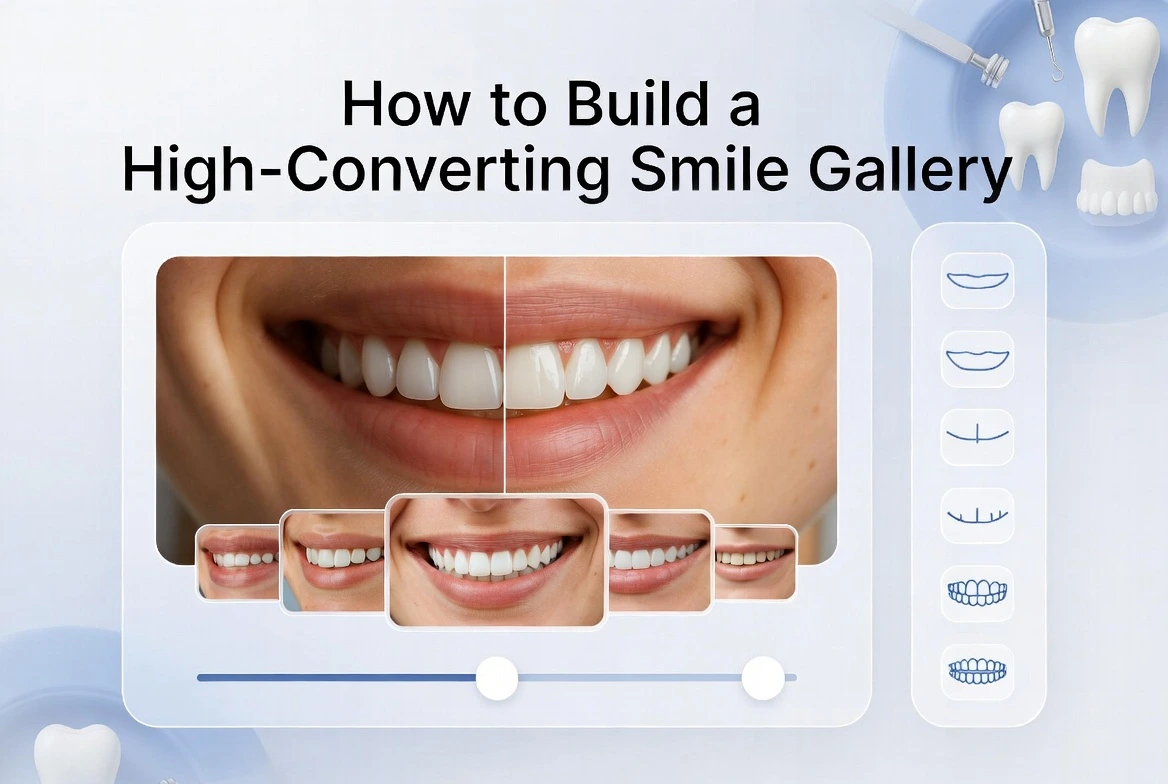 A well-designed smile gallery plays a central role in how dental patients evaluate credibility, clinical skill, and potential treatment outcomes. When structured with clarity and intention, a gallery can function as one of the strongest conversion assets on a dental website. WEO Media – Dental Marketing often observes that practices treating cosmetic, implant, and restorative cases benefit most when their galleries demonstrate both technical proficiency and patient-centered outcomes in a visually consistent way. A well-designed smile gallery plays a central role in how dental patients evaluate credibility, clinical skill, and potential treatment outcomes. When structured with clarity and intention, a gallery can function as one of the strongest conversion assets on a dental website. WEO Media – Dental Marketing often observes that practices treating cosmetic, implant, and restorative cases benefit most when their galleries demonstrate both technical proficiency and patient-centered outcomes in a visually consistent way.
This guide explains the components, frameworks, and optimization principles that help a smile gallery perform as a trustworthy, conversion-driven resource.
Why Smile Galleries Convert at Such a High Rate
Smile galleries influence decisions because they meet two core user expectations: evidence and relatability. Patients want verification that a dentist can produce results similar to the transformation they’re seeking. Real, case-based imagery fulfills this need more effectively than explanatory text alone.
High-performing smile galleries leverage:
| • |
Visual storytelling - Patients respond to clear narratives of change reflected in sequential images.
|
| • |
Social proof - Documented outcomes reduce perceived risk and strengthen credibility.
|
| • |
Demonstrated expertise - Consistent examples across implants, veneers, orthodontics, and comprehensive rehabilitation inform expectations.
|
| • |
Improved case acceptance - Patients feel more prepared to discuss treatment options. |
When developed with user intent in mind, a smile gallery becomes a persuasive, educational resource rather than a simple image archive.
The Core Components of a High-Converting Smile Gallery
Foundational design elements determine how effectively users can navigate, interpret, and trust your gallery. Our dental marketing experts often see usability and clarity as the primary predictors of conversion behavior.
| • |
High-quality before-and-after images
- Standardized lighting and angles control for visual variables.
|
| • |
Case descriptions - Brief narratives contextualize the clinical decisions behind each transformation.
|
| • |
Clear categorization - Organizing by procedure type aligns with how users filter their needs.
|
| • |
User-friendly layout - Predictable navigation patterns support longer on-page engagement.
|
| • |
Subtle calls to action - Encourages next steps without disrupting visual exploration. |
These structural elements help users make sense of what they are viewing and how it relates to their own goals.
How to Capture High-Quality Before-and-After Photos
Image consistency is critical for credibility. Users quickly notice variations in lighting, distance, and angle—and search engines evaluate these visuals as well, particularly when alt text and structured data are integrated correctly.
To achieve professional, consistent results:
| • |
Use consistent lighting - Controlled illumination helps avoid misrepresentation.
|
| • |
Maintain the same angles - Ensures the “after” image reads as a true comparison.
|
| • |
Use high-resolution cameras - Details support both clinical accuracy and user trust.
|
| • |
Ensure neutral backgrounds - Minimizes visual noise and increases focus.
|
| • |
Capture both close-up and full-face photos - Serves different user intents—from technical evaluation to aesthetic overview. |
Our dental marketing company often finds that small improvements in photographic consistency significantly affect perceived expertise.
Organizing Cases for Maximum User Engagement
Navigation structure influences how deeply users explore the gallery. Clear segmentation improves orientation, helping visitors find cases most relevant to their needs.
| • |
Categorize by treatment type - Organizes information around common search queries.
|
| • |
Use filters - Allows users to refine based on conditions, procedures, or case complexity.
|
| • |
Display featured cases first - Places high-impact results at the top of the funnel.
|
| • |
Keep descriptions brief - Supports fast scanning behavior.
|
| • |
Show diverse patient examples - Improves relatability across demographic groups. |
Thoughtful structure supports both accessibility and deeper engagement metrics, which indirectly influence SEO performance.
The Power of Storytelling in Smile Galleries
Story-driven content strengthens emotional connection. Search behavior shows that patients seek reassurance about both the aesthetic and functional value of treatment, and narrative elements help communicate those nuances.
| • |
Explain the problem - Users better understand context when challenges are articulated clearly.
|
| • |
Describe the solution - Clarifies treatment logic without overwhelming technical detail.
|
| • |
Highlight the outcome - Addresses patient goals such as comfort, symmetry, or confidence.
|
| • |
Keep language simple - Aligns with general consumer reading levels.
|
| • |
Use patient-approved testimonials - Adds authentic voice when permissible. |
Narrative framing increases perceived relevance and helps users project themselves into similar treatment scenarios.
Using CTAs Without Disrupting the Gallery Experience
CTAs should complement—not compete with—the visual flow. User behavior studies show that intrusive prompts reduce viewing time and increase bounce rates.
| • |
Place CTAs below or beside the gallery - Keeps the visual field clear.
|
| • |
Use soft language - Encourages exploration rather than immediate commitment.
|
| • |
Connect CTAs to relevant pages - Improves user-path continuity.
|
| • |
Include sticky navigation - Maintains access to next-step actions without forcing them. |
WEO Media – Dental Marketing often recommends contextual CTAs tied to specific case categories to reinforce topical relevance.
Optimizing Smile Galleries for Mobile Users
Most smile gallery traffic originates from mobile devices, where user behavior differs from desktop interactions. Prioritizing mobile UX ensures broader accessibility and stronger engagement metrics.
| • |
Use responsive grids - Maintains layout integrity across screen sizes.
|
| • |
Avoid heavy file sizes - Faster load times improve both SEO and user satisfaction.
|
| • |
Ensure vertical scrolling - Aligns with dominant mobile interaction patterns.
|
| • |
Keep text readable - Supports skim-friendly behavior. |
Mobile performance is also a key ranking factor, making optimization essential for visibility.
ADA Considerations for Smile Galleries
Accessibility is not only a compliance requirement—it directly impacts usability and audience reach. Search engines increasingly reward content that accounts for accessibility best practices.
| • |
Add descriptive alt text - Helps convey clinical context to users with visual impairments.
|
| • |
Ensure keyboard navigation - Supports non-mouse browsing.
|
| • |
Provide caption options for video cases
- Broadens access for users with hearing differences.
|
| • |
Use readable contrast and fonts - Reinforces clarity and inclusion. |
These principles help maintain a consistent experience for all users while reducing potential compliance concerns.
How to Showcase Your Best Cases First
Featured sections act as narrative anchors. The top of the gallery is where users form initial impressions about skill level and case variety.
| • |
Select dramatic transformations - High-contrast changes capture immediate attention.
|
| • |
Highlight high-value treatments - Aligns prominent cases with strategic service priorities.
|
| • |
Use professional captions - Frames the transformation meaningfully.
|
| • |
Rotate featured cases regularly - Maintains freshness for returning visitors. |
Strategic placement improves relevance signals and helps guide users into deeper exploration.
SEO Best Practices for Smile Galleries
A smile gallery contributes to organic visibility when optimized for search behavior and technical performance. Understanding how search engines interpret multimedia elements is key.
| • |
Optimize image file names - Indicates relevance through structured naming conventions.
|
| • |
Add keyword-rich alt text - Helps search engines classify content accurately.
|
| • |
Include descriptive captions - Offers semantic context for both users and crawlers.
|
| • |
Use structured data - Enables enhanced indexing for case studies.
|
| • |
Create internal links - Strengthens topical clustering and helps search engines understand hierarchy. |
These techniques help integrate the smile gallery into a broader content ecosystem, improving visibility for cosmetic and implant dentistry queries.
Common Mistakes That Lower Smile Gallery Conversions
Several recurring issues reduce the impact and clarity of a smile gallery, leading to diminished trust signals.
| • |
Using inconsistent lighting - Introduces doubt about authenticity.
|
| • |
Overcrowding the gallery - Excessive images dilute relevance.
|
| • |
Using stock photos - Breaks credibility and user trust.
|
| • |
Not anonymizing patient details - Raises privacy concerns.
|
| • |
Neglecting mobile optimization - Reduces conversion potential and SEO value. |
Correcting these issues helps present a more authoritative and user-centric gallery.
FAQs
Why is a smile gallery important for dental practices?
Smile galleries function as real-world proof of clinical outcomes, helping users evaluate whether a dentist can meet their aesthetic or functional goals. They are also among the most influential resources for users comparing cosmetic and implant services.
How many cases should a smile gallery include?
Most effective smile galleries feature 12–30 strong, well-categorized cases. This provides adequate variety without overwhelming visitors or diminishing the impact of high-quality examples.
Do smile galleries improve SEO?
Yes. Optimized images, alt text, captions, structured data, and internal links all contribute to improved organic visibility. Strong engagement metrics from visual content further reinforce relevance signals.
Should smile galleries include written case descriptions?
Brief case descriptions help users interpret each transformation, understand treatment rationale, and relate emotionally to comparable dental concerns. This context often increases time-on-page and conversion likelihood. |
|