Dental Email Marketing for Nurture, Reactivation, and Education
Posted on 12/22/2025 by WEO Media |
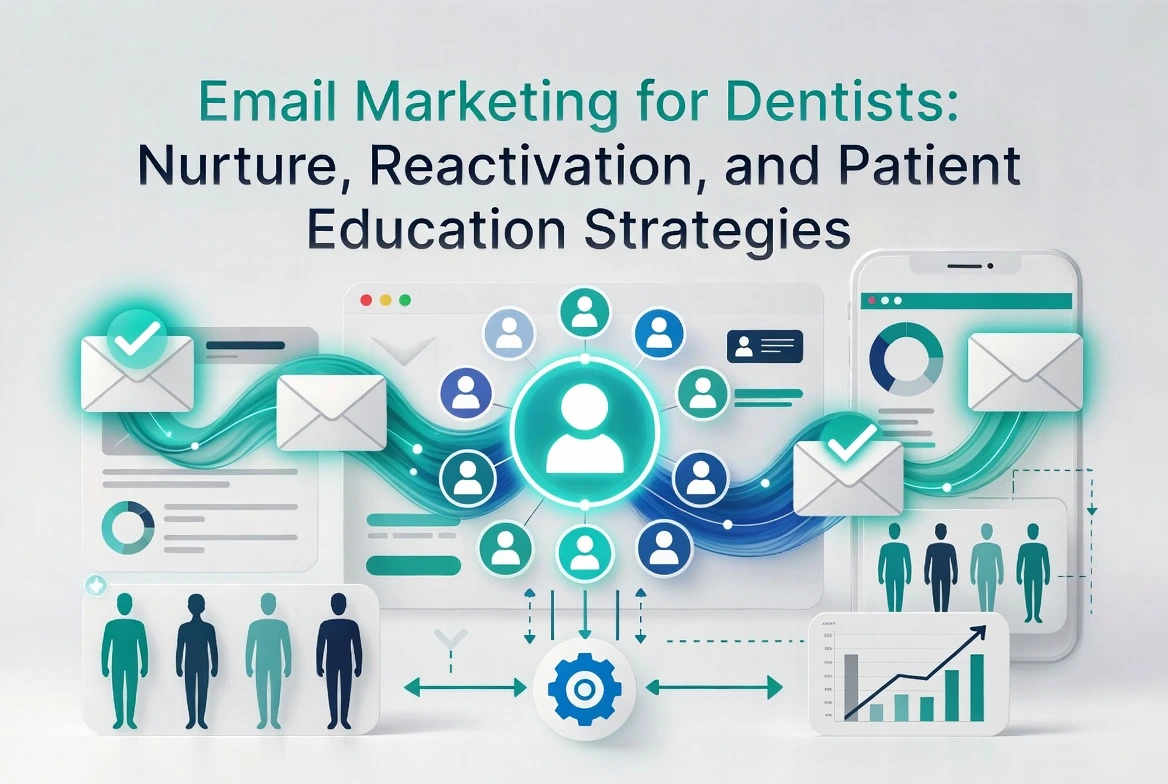 Email remains one of the most underutilized yet highest-ROI tools for modern dental practices. When used correctly, email marketing for dentists
strengthens patient relationships, increases retention, boosts treatment acceptance, supports reactivation, and enhances long-term practice stability. Insights from WEO Media – Dental Marketing highlight how consistent, strategically structured communication can significantly improve patient lifetime value while reducing unpredictable fluctuations in the schedule. Email remains one of the most underutilized yet highest-ROI tools for modern dental practices. When used correctly, email marketing for dentists
strengthens patient relationships, increases retention, boosts treatment acceptance, supports reactivation, and enhances long-term practice stability. Insights from WEO Media – Dental Marketing highlight how consistent, strategically structured communication can significantly improve patient lifetime value while reducing unpredictable fluctuations in the schedule.
A well-built email system allows dental teams to deliver personalized, compliant messaging that educates, nurtures, and motivates patients toward informed decisions. From automated recalls to patient education sequences and targeted reactivation workflows, email serves as a predictable and scalable communication channel for practices seeking sustainable operational balance.
Why Email Marketing Matters for Dental Practices
Email is a direct, low-friction communication medium uniquely suited to dental patient behavior. Because most patients interact with their dental office only a few times per year, consistent messaging helps fill long gaps between visits and strengthens long-term continuity. Algorithm-free inbox delivery also gives practices full control over reach—an advantage not shared by social media platforms.
From an SEO and audience-retention perspective, the smartest dental email programs align with core search intent: information, reassurance, and clarity. Patients engage when content reduces confusion or offers practical guidance, and search algorithms reward brands that demonstrate depth and authority across multiple channels.
| • |
Higher Patient Retention - Consistent communication supports ongoing engagement throughout the patient lifecycle.
|
| • |
Increased Treatment Acceptance - Clarity-driven education helps patients better understand recommended care.
|
| • |
Predictable Revenue Stability - Automated workflows minimize no-shows and encourage overdue patients to rebook.
|
| • |
Improved Patient Experience - Proactive outreach builds trust and reduces uncertainty.
|
| • |
Cost-Effective Growth - Email provides measurable, sustainable impact with minimal overhead. |
Practices using structured email systems consistently see fewer inactive patients and a stronger, more reliable hygiene pipeline.
Building an Effective Email Segmentation Strategy
Segmentation allows for refined targeting based on behavioral patterns, user intent, and lifecycle stage. Effective segmentation is one of the strongest predictors of email performance because it prevents overgeneralized messaging and aligns each communication with a specific patient need.
Our dental marketing experts emphasize that segmentation mirrors the logic behind modern search algorithms: relevance increases engagement. When messages match a user’s current objective—such as seeking preventive care information, reviewing treatment options, or returning after a lapse—open rates and conversions increase naturally.
| • |
Active Patients - Best suited for preventive messaging, education, and routine reminders.
|
| • |
Overdue Patients - Targeted reactivation content reconnects individuals who may have fallen behind on care.
|
| • |
New Patients - A structured welcome sequence orients patients and reduces first-visit uncertainty.
|
| • |
Treatment-Specific Groups - Ideal for orthodontics, implants, cosmetic dentistry, or periodontal education.
|
| • |
Canceled or No-Show Patients - Follow-up sequences reinforce the importance of rescheduling. |
Segmentation transforms email from generic outreach into context-aware communication aligned with patient expectations.
Essential Email Workflows Every Dental Practice Should Use
Automated workflows help maintain consistency and ensure timely communication. By aligning workflow triggers with common patient behaviors, practices establish a predictable rhythm that supports both retention and reactivation.
Our dental marketing agency often evaluates workflows through the lens of lifecycle mapping—identifying the specific moments when patients are most receptive to guidance or reminders. This mirrors best practices used in broader digital marketing ecosystems, where timing and contextual relevance drive engagement.
| 1. |
New Patient Welcome Series that sets expectations and reduces first-visit uncertainty.
|
| 2. |
Hygiene Recall Reminders timed at key preventive intervals to reinforce ongoing care.
|
| 3. |
Reactivation Campaigns for overdue or inactive patients using education-focused messaging.
|
| 4. |
Treatment Follow-Up Sequences that address recovery expectations and long-term maintenance.
|
| 5. |
Treatment Plan Nurture Emails anchored in patient concerns, benefits, and clarity.
|
| 6. |
Seasonal or Benefits-Related Campaigns tied to insurance renewals or schedule availability. |
These workflows form the foundation of email systems that operate reliably with minimal staff involvement.
Best Practices for High-Performing Dental Email Messaging
Strong messaging prioritizes clarity, education, and user intent. Patients respond best to content that anticipates their questions, provides reassurance, and explains processes in digestible terms. Overly promotional language typically performs worse, both in open rates and engagement, as users prefer value-driven communication.
Our dental marketing company emphasizes the importance of aligning content with expected search behavior. For example, patients often look for explanations, symptom clarity, or treatment comparisons—topics that also perform well in email format when presented with concise, accessible language.
| • |
Use Clear, Patient-Friendly Language - Replace jargon with easy-to-understand explanations.
|
| • |
Educate Rather Than Sell - Value-driven content promotes trust and long-term loyalty.
|
| • |
Personalize When Possible - Small personalized elements increase relevance and engagement.
|
| • |
Maintain a Consistent Schedule - Predictability improves inbox recognition and open rates.
|
| • |
Use Visuals Thoughtfully - Educational graphics and de-identified examples aid comprehension. |
Messaging clarity not only improves email results but also strengthens the overall patient experience.
HIPAA-Compliant Email Marketing Considerations
Compliance is foundational to any healthcare-related communication. Dental teams must follow strict guidelines to ensure that no protected health information is shared through unencrypted channels. This affects not only message content but also software selection, internal workflows, and staff training.
Understanding HIPAA alignment helps practices reduce risk and create confidence for patients who expect secure, professional communication. Many dental organizations adopt encrypted platforms or segmented systems that separate marketing messages from clinical updates, ensuring both compliance and practical usability.
| • |
No Protected Health Information in Standard Emails - Treatment specifics require secure platforms.
|
| • |
Use a HIPAA-Compliant Email Platform - Encryption and BAAs are essential for regulated communication.
|
| • |
Obtain Proper Patient Consent - Marketing emails require documented opt-in.
|
| • |
Be Mindful with Videos & Images - Only de-identified or authorized visuals should be used.
|
| • |
Secure Internal Processes - Staff must understand compliant communication practices. |
These practices ensure a balance between effective marketing outreach and strict privacy standards.
Using Email to Improve Patient Education
Educational email content aligns strongly with modern search intent, as patients frequently seek answers before scheduling or accepting treatment. High-performing educational emails break down concepts into accessible explanations that reduce anxiety and address uncertainty.
In practice, these messages are most effective when aligned with real-world patient questions—mirroring queries commonly typed into search engines. This reinforces topical authority and contributes to a more informed patient community.
Effective education topics include:
| • |
Preventive Care Tips - Reinforcing hygiene habits and routine visit expectations.
|
| • |
Treatment Breakdown Guides - Clarifying what procedures involve and why they are recommended.
|
| • |
Insurance Renewal Reminders - Helping patients maximize annual benefits.
|
| • |
Post-Procedure Care - Enhancing recovery outcomes and patient confidence.
|
| • |
Smile Improvement Options - Providing insight into cosmetic and restorative choices. |
The more consistently a practice educates patients, the stronger the overall trust relationship becomes.
How Email Marketing Stabilizes and Grows Practice Revenue
Dental offices often experience cyclical scheduling fluctuations. Email serves as a stabilizing force by nudging patients toward timely care, reducing lapsed appointments, and encouraging completion of pending treatment. When applied correctly, email becomes part of the practice’s operational infrastructure, not just a marketing add-on.
Many of these outcomes align with behavioral economics principles: consistent reminders reduce procrastination, education lowers emotional friction, and timing improves follow-through. Our dental marketing experts often recommend mapping emails to the patient's decision-making journey to create natural, non-intrusive touchpoints.
| • |
More Consistent Hygiene Appointments - Structured reminders maintain preventive care loops.
|
| • |
Improved Reactivation Rates - Inactive patients return when messaging feels supportive and informative.
|
| • |
Higher Acceptance of Recommended Treatment - Clear explanations help patients make confident decisions.
|
| • |
Reduced No-Shows - Automated systems minimize last-minute schedule loss.
|
| • |
More Predictable Patient Flow - Balanced schedules reduce administrative stress. |
This creates a long-term framework for predictable patient engagement and smoother operational efficiency.
FAQs
How often should dental practices send marketing emails?
Most practices benefit from a monthly educational email supported by workflow-based automations triggered by patient behavior. Regularity helps establish inbox familiarity while preventing message fatigue.
Is email marketing effective for reactivating overdue dental patients?
Yes. Targeted reactivation sequences perform well because they align with patient intent cycles. When messages provide clarity, reassurance, or helpful reminders, inactive patients often return for overdue appointments.
What types of emails increase dental treatment acceptance?
Educational messages that focus on expectations, recovery steps, long-term benefits, or comparisons between treatment options help reduce uncertainty and encourage informed patient decisions.
Can dental practices use before-and-after photos in emails?
Yes, with caution. Before-and-after photos must be fully de-identified or shared with documented patient authorization to meet HIPAA guidelines and maintain ethical communication standards. |
|