Missed Dental Calls and Marketing Automation
Posted on 5/30/2026 by WEO Media |
How to Recover Lost Patients Automatically
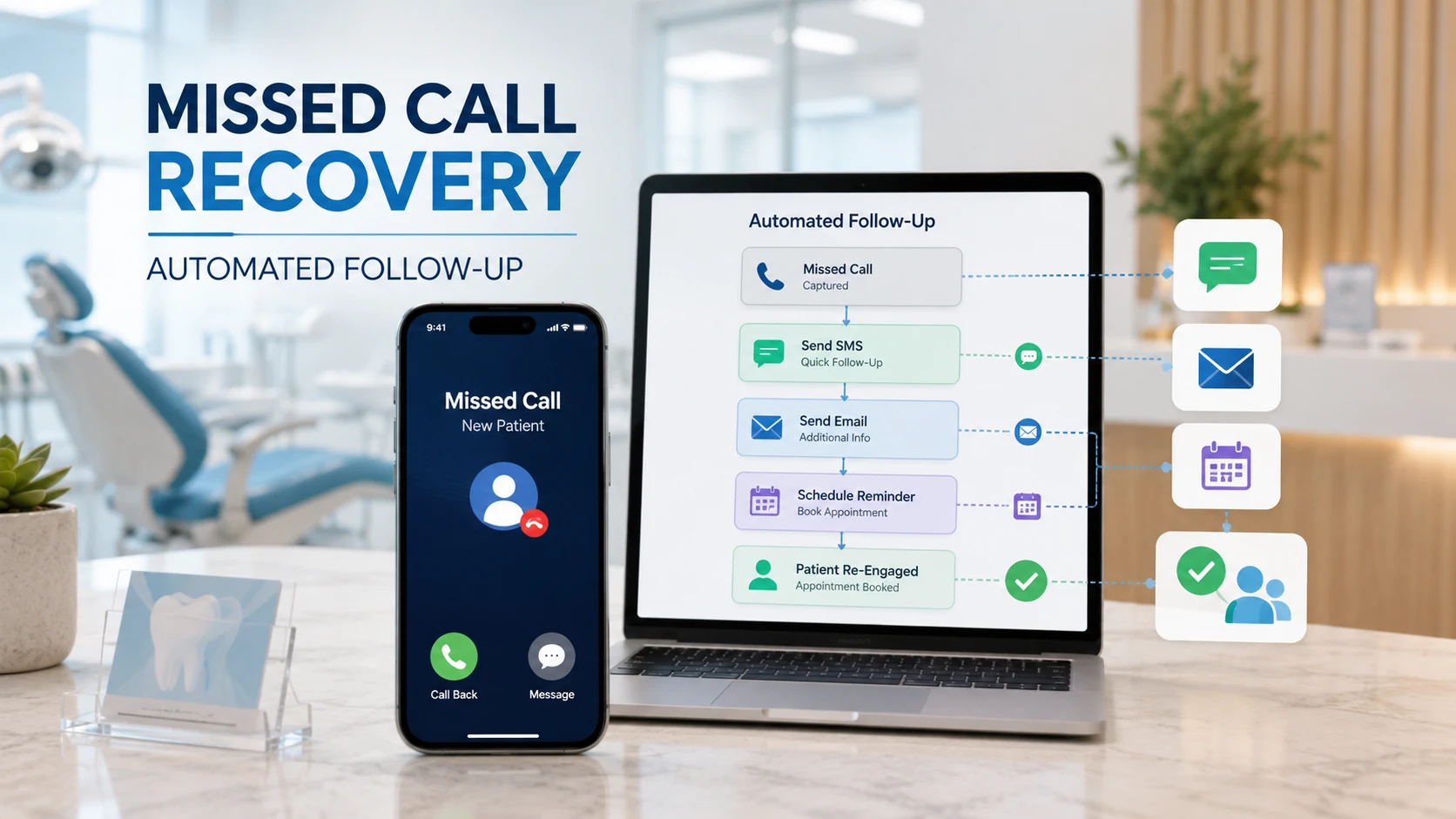 Marketing automation helps dental practices recover lost patients after missed calls by instantly texting back the caller, triggering a timed SMS and email follow-up sequence, and routing the reply to a real person who can book the appointment. Marketing automation helps dental practices recover lost patients after missed calls by instantly texting back the caller, triggering a timed SMS and email follow-up sequence, and routing the reply to a real person who can book the appointment.
A missed call is rarely a lost lead; it is an unworked lead. The practices that recover the most appointments treat every missed call as the start of an automated, consent-based conversation rather than the end of one.
The math is brutal but fixable. Most missed calls happen during the exact windows your marketing works hardest—lunch, end-of-day, Mondays, and the minutes right after a new ad goes live. When no one answers, a meaningful share of those callers never call back; many simply dial the next practice in the search results. Marketing automation closes that gap by responding in seconds, every time, without depending on whoever is or isn’t free at the front desk.
Already capturing most of your calls live? Use this as a safety net for overflow and after-hours. If your bigger problem is too few calls in the first place, fix lead generation first, then layer automation on top.
Below, you’ll learn how to set up missed-call text-back, build a follow-up sequence that books appointments, connect the automation to your phone system and scheduler, measure recovery honestly, and stay compliant with consent and privacy rules—without spamming patients or replacing the human touch.
Written for: dental practice owners, office managers, and marketing coordinators who want to stop losing booked appointments to unanswered phones and turn missed calls into a reliable, automated recovery system.
TL;DR
If you only do six things, do these:
| 1. |
Text back every missed call automatically - fire an instant reply within seconds so the caller hears from you before they dial a competitor
|
| 2. |
Get consent before you automate texts - capture explicit opt-in on forms, calls, and intake so your SMS follow-up is TCPA-compliant from the start
|
| 3. |
Build a short, timed sequence - a few well-spaced SMS and email touches over several days beat one message or an endless drip
|
| 4. |
Always hand off to a human to book - automation starts the conversation; a trained team member confirms and schedules the visit
|
| 5. |
Connect the data - feed missed-call events into your scheduler and CRM so nothing falls through the cracks and you can report on it
|
| 6. |
Measure recovery, not activity - track missed calls → replied → reached → booked → kept, not just how many texts went out |
Table of Contents
How much do missed dental calls really cost?
You don’t need an industry statistic to size this problem—you can measure it with your own numbers in one week. The cost of a missed call isn’t the call itself; it’s the appointment that never gets booked because the caller moved on. Across a multi-location group, the cost of missed calls compounds quickly.
Pull your call logs and build a simple recovery model using your own figures:
| • |
Count missed inbound calls - over 7 days, during open hours, separate from after-hours
|
| • |
Estimate new-patient intent - what share of missed calls are likely first-time patients versus existing-patient logistics
|
| • |
Apply your booking and kept rates - the rates you already see on answered calls give you a realistic conversion assumption
|
| • |
Multiply through - missed new-patient calls × expected booking rate × expected kept rate = recoverable appointments you’re leaving on the table each week |
That last number is the case for automation. For most practices it is larger than expected because misses cluster in predictable windows. A pattern we commonly see is that a small block of peak-hour and after-hours misses accounts for the majority of lost new-patient demand—which is exactly where an automated text-back earns its keep.
Two truths to hold at once: first, the goal is still to answer live whenever possible, because a real conversation converts best—which is where strong dental phone scripts pay off. Second, you will never answer 100% live, so automation is the safety net that catches the overflow instead of letting it spill.
> Back to Table of Contents
What marketing automation can (and cannot) fix
Marketing automation is the system of triggered messages and workflows that respond to patient actions—like a missed call, a form submission, or an unconfirmed appointment—without manual effort each time. Used well, it makes your front desk faster and more consistent. Used poorly, it feels like spam and erodes trust—so knowing what to automate and what not to is half the battle.
What automation does well:
| • |
Speed - it replies in seconds, around the clock, with no “we were slammed” gaps
|
| • |
Consistency - every missed caller gets the same professional first touch, regardless of who’s working
|
| • |
Persistence - it follows up on a schedule so leads don’t die after one unanswered attempt
|
| • |
Visibility - it logs every touch and outcome so you can finally report on recovery |
What automation cannot do:
| • |
Close the booking by itself - a person still confirms insurance questions, answers concerns, and locks in the time
|
| • |
Fix a coverage problem you’re ignoring - if you’re missing calls all day, your front desk process and staffing come first
|
| • |
Replace genuine care - patients can tell a wall of canned messages from a practice that actually wants to help
|
| • |
Manufacture consent - you can only automate texts to people who have opted in |
The right mental model is automation starts conversations; humans finish them. The text-back buys you time and keeps the lead warm; your team turns that warmth into a kept appointment.
> Back to Table of Contents
How to set up missed-call text-back automation
Missed-call text-back is the single highest-leverage automation for a dental practice. The mechanic is simple: when an inbound call goes unanswered, the system automatically sends the caller a friendly SMS within seconds, inviting them to reply, book, or request a callback.
The core trigger and message
The trigger is a missed or abandoned inbound call. The first message should be short, human, and action-oriented—not a marketing blast. A workable template:
| • |
Acknowledge - “Hi, this is the team at [practice]. Sorry we missed your call!”
|
| • |
Offer a next step - “We’d love to help—reply here and we’ll get you scheduled, or call us back at 888-246-6906.”
|
| • |
Set expectations - “A team member will text you back shortly during office hours.” |
Keep it to two or three sentences. The point is to reopen the conversation, not to sell.
Live hours versus after hours
Branch the automation by time of day. During office hours, the text-back should promise a near-term human reply and alert your team that a missed call needs working. After hours, the message should set honest expectations and offer a self-service option:
| • |
Office hours path - instant text-back plus an internal alert so a real person replies fast and can book
|
| • |
After-hours path - instant text-back that says when you’ll respond next business day, with an optional scheduling link or callback request |
Common setup mistakes to avoid
A few failure modes show up again and again:
| • |
Texting existing patients with new-patient language - segment so a current patient calling about a crown doesn’t get a “welcome, new patient!” blast
|
| • |
No human owner - if replies land in an inbox no one watches, the automation just delays the drop-off instead of preventing it
|
| • |
Texting landlines - some inbound calls come from numbers that can’t receive SMS; build a fallback (voicemail follow-up or a callback task) for those
|
| • |
Forgetting consent - the text-back itself is generally a reply to the patient’s own call, but ongoing follow-up needs a clear opt-in |
> Back to Table of Contents
Building a follow-up sequence that books appointments
One text rarely books a patient. A short, well-spaced sequence does the heavy lifting—persistent enough to recover the lead, restrained enough that it never feels like harassment.
A practical recovery sequence might run across several days and channels:
| 1. |
Minute 0 (SMS) - the instant text-back acknowledging the missed call and inviting a reply
|
| 2. |
Same day, a few hours later (SMS) - a gentle nudge if there’s no reply: “Still happy to help—want me to find you a time this week?”
|
| 3. |
Next business day (email or SMS) - a slightly longer touch with an online scheduling link and a sentence on what to expect as a new patient
|
| 4. |
Day 3–4 (final touch) - a friendly last check-in that makes it easy to say yes now or opt out cleanly
|
| 5. |
On reply (handoff) - the sequence stops the moment a human takes over so the patient never gets an automated message mid-conversation |
The stop-on-reply rule matters most. Nothing damages trust faster than a scheduled drip firing while a patient is mid-text with your front desk.
Channel realities to plan around
Match the channel to how it actually behaves:
| • |
SMS - high open rates and fast replies, but standard text messaging does not give you read receipts, so don’t assume “delivered” means “read”
|
| • |
Email - more room to set expectations and link to scheduling, but lower urgency; use it as support—automated email sequences work well here—not your lead channel for recovery
|
| • |
Voice - a quick human callback still outperforms everything for high-intent new patients; use automation to flag the lead, not to avoid calling |
Tone and frequency guardrails
| • |
Cap the touches - a handful of messages over a few days, then stop; endless drips train patients to ignore you
|
| • |
Sound like a person - first name, plain language, no jargon or all-caps urgency
|
| • |
Always offer an exit - a clear opt-out in every automated message keeps you compliant and respectful |
> Back to Table of Contents
Connecting your phone system, scheduler, and CRM
Automation only works if the right tools talk to each other. The recovery loop depends on three connections: the phone system that detects the missed call, the messaging platform that sends the follow-up, and the scheduler or CRM that records the outcome.
The connections that matter:
| • |
Phone system → automation - your VoIP or call-tracking platform needs to report missed and abandoned calls in real time so the text-back can fire instantly
|
| • |
Automation → team alert - missed calls during office hours should create a task or notification a named person owns, not just a passive log entry
|
| • |
Automation → scheduler - replies should make it easy to book, ideally with a link or a fast human handoff into your scheduling software
|
| • |
Everything → CRM or patient record - log the missed call, the touches, and the final outcome in one place so you can report and avoid double-contacting |
A few integration cautions: confirm your phone or call-tracking system actually exposes a real-time “missed call” event, because some only show it in next-day reports—too slow for text-back. Confirm the patient’s mobile number is captured cleanly so the SMS reaches the right device. And keep one system as the source of truth for outcomes so your numbers don’t disagree with themselves.
> Back to Table of Contents
How to measure missed-call recovery
The mistake here is measuring activity—how many texts you sent—instead of recovery. The scoreboard that matters tracks the patient’s journey from missed call to kept appointment.
Track these five numbers weekly:
| 1. |
Missed calls - total unanswered inbound calls, split by office hours and after hours
|
| 2. |
Replied - how many missed callers responded to the text-back at all
|
| 3. |
Reached - how many you connected with live or held a real two-way conversation with
|
| 4. |
Booked - how many turned into a scheduled appointment
|
| 5. |
Kept - how many of those actually showed up |
Reviewing these together shows exactly where recovery breaks down. If lots reply but few book, the handoff or scheduling step is weak. If few reply at all, the message or timing needs work. If booked-but-not-kept is high, your confirmation and reminder process needs attention.
This turns “we think the texts help” into “we recovered this many appointments.” Set a realistic baseline in week one, then improve one stage at a time. Results vary by call volume, staffing, and how fast a human can take over—so treat early numbers as a starting model, not a guarantee.
> Back to Table of Contents
Consent, TCPA, and patient privacy
Automated texting lives under real rules, and dental practices handle sensitive information—so build compliance in from the start rather than bolting it on later.
Consent comes first. Under the Telephone Consumer Protection Act (TCPA), marketing texts sent with automation generally require prior express written consent, while a routine reply to a patient’s own call sits closer to expected, transactional contact. Either way, it pays to follow consent-first SMS best practices. The cleanest approach is to capture documented opt-in everywhere a patient touches you:
| • |
On web forms - a clear, unchecked written-consent line explaining they may receive texts, with a link to terms
|
| • |
On calls - confirm and log permission to text them about their visit
|
| • |
At intake - a signed, documented opt-in on new-patient paperwork |
Then respect the boundaries:
| • |
Honor opt-outs immediately - process “STOP” and similar requests automatically and stop all messaging to that number
|
| • |
Keep marketing and care messages distinct - consent for appointment logistics is not blanket consent for promotional blasts
|
| • |
Mind quiet hours and frequency - avoid late-night sends and cap how often you contact a single number
|
| • |
Protect the content - keep texts light on clinical detail; protected health information belongs in secure channels, not casual SMS |
This isn’t legal advice, and rules change—so confirm your specific setup with qualified counsel and your messaging provider. The practical takeaway: a recovery system built on clean consent is both safer and more effective, because the people you’re texting actually want to hear from you.
> Back to Table of Contents
Get help building your recovery system
Recovering missed calls with marketing automation isn’t about buying one more tool—it’s about wiring your phones, messaging, scheduler, and team into a single loop that catches demand your marketing already paid for. If you want help mapping where your calls leak and building an automated, compliant recovery system around them, the team at WEO Media - Dental Marketing can help. Call 888-246-6906 or schedule a consultation to start the conversation.
> Back to Table of Contents
FAQs
What is missed-call text-back for dental offices?
Missed-call text-back is an automation that detects an unanswered inbound call and instantly sends the caller a friendly SMS inviting them to reply, book, or request a callback. For dental practices it works as a safety net during peak windows and after hours, reopening the conversation within seconds so high-intent callers don’t simply dial the next practice.
Is it legal to automatically text patients who call?
Marketing texts sent with automation generally require prior express written consent under the TCPA, while a routine reply to the patient’s own call sits closer to expected, transactional contact. The safest approach is to capture documented opt-in on forms and intake paperwork, honor opt-outs promptly, and keep clinical detail out of casual SMS. This is general information rather than legal advice, and the rules are evolving, so confirm your specific setup with qualified counsel and your messaging provider.
How fast should the missed-call text go out?
As close to instant as possible—within seconds of the missed call. Speed is the whole advantage of automation, because callers who don’t reach you often move on within minutes. A reply that arrives while the practice is still top of mind recovers far more leads than one sent hours later.
Will marketing automation replace my front desk?
No. Automation starts the conversation and keeps the lead warm, but a trained team member still confirms details, answers questions, and books the appointment. The best results come from pairing instant automated text-back with a fast human handoff, not from replacing people with canned messages.
How many follow-up messages should a sequence send?
A handful of well-spaced touches over a few days usually works best—an instant text-back, a same-day nudge, a next-day message with a scheduling option, and a final friendly check-in. The sequence should stop the moment a human takes over the conversation, and every message should include a clear way to opt out.
How do I measure whether the automation is working?
Track the journey, not the activity: missed calls, replied, reached, booked, and kept, reviewed weekly. This shows exactly where recovery breaks down—weak messaging if few reply, a weak handoff if many reply but few book, or a reminder problem if booked appointments aren’t kept. Treat early numbers as a baseline you improve one stage at a time.
Can I tell if a patient read my text?
Not reliably. Standard SMS does not support read receipts, so a “delivered” status only confirms the message reached the carrier or device, not that the patient read it. Judge performance by replies and bookings rather than assuming delivery equals engagement. |
|