Social Media Marketing for Orthodontists
Posted on 6/27/2026 by WEO Media |
How to Turn Followers Into Booked Consultations
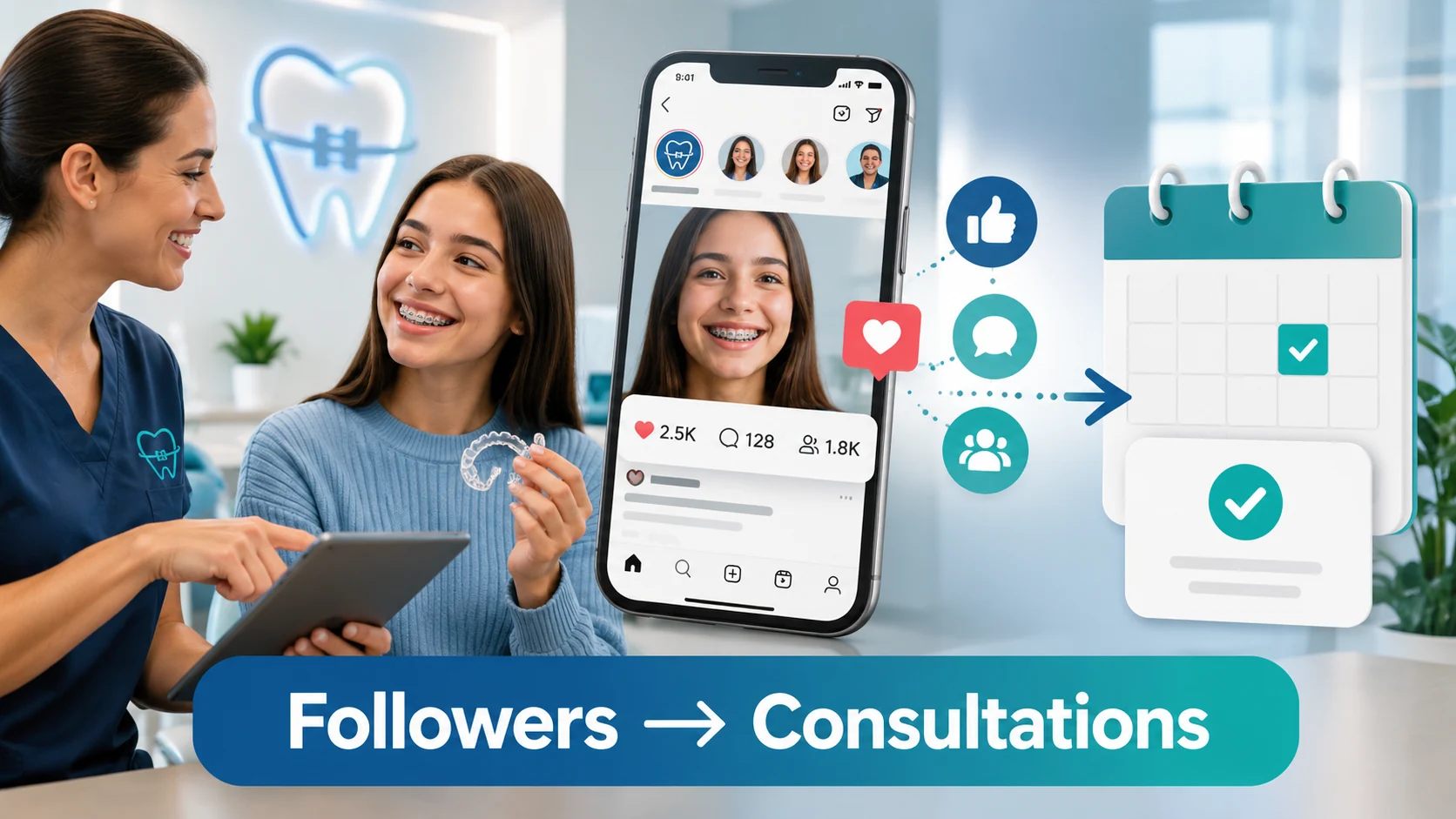 Social media marketing for orthodontic practices can turn followers into booked consultations by treating each platform as a path to a scheduled exam, not a digital billboard, and giving prospective patients and parents one obvious, low-friction way to request a consult. The practices that win on social media aren’t the ones with the biggest following — they’re the ones that make the next step obvious, answer fast, and stay compliant while they do it. Social media marketing for orthodontic practices can turn followers into booked consultations by treating each platform as a path to a scheduled exam, not a digital billboard, and giving prospective patients and parents one obvious, low-friction way to request a consult. The practices that win on social media aren’t the ones with the biggest following — they’re the ones that make the next step obvious, answer fast, and stay compliant while they do it.
The disconnect is common: many orthodontic practices post consistently but can’t tell whether any of it actually produces consultations. The gap sits between content that gets seen and content that gets someone to request an exam. It helps to stop treating social media as a megaphone and start treating it as the top of a consultation funnel: reach → engagement → profile visit → consult request → booked exam → kept appointment → started case. Every post has one job — move someone one step down that path.
Because orthodontics is a regulated health service, this also has to be done carefully. HIPAA, the FTC, and each platform’s health-advertising rules all apply, and a strategy that ignores them can get an ad account suspended or create real liability. Below is how to choose platforms, build content that converts, stay compliant, turn followers into booked consultations, decide between organic and paid, and measure what actually matters.
Already posting regularly but not seeing consults? Skip ahead to turning followers into booked consultations. If you’re starting from scratch, read in order.
Written for: orthodontic practice owners, office managers, treatment coordinators, and marketing coordinators at orthodontic and pediatric practices and DSOs who want social media to produce booked consultations, not just likes.
TL;DR
If you only do five things, do these:
| 1. |
Choose platforms by who books - parents of kids and teens live on Facebook and Instagram, while adult aligner patients skew to Instagram and TikTok, so concentrate where your decision-makers actually are instead of spreading thin
|
| 2. |
Post proof, not promotions - patient journeys, treatment explainers, and your team’s expertise build trust faster than discount graphics, and trust is what turns a follower into a consult request
|
| 3. |
Get compliance right before you post a single patient photo - HIPAA authorization for any identifiable patient, parental consent for minors, and FTC-compliant reviews are non-negotiable for a health practice
|
| 4. |
Make requesting a consult one tap away - a working booking link, fast direct-message replies during business hours, and a clear next step convert interest before it cools
|
| 5. |
Track consult requests and started cases - cost per consult, consult show rate, and case starts tell you whether social media is paying for itself, in a way that followers and likes never will |
Table of Contents
Why social media drives orthodontic consultations
Orthodontics is unusually well-suited to social media, for three reasons that don’t apply to most of dentistry. Treatment is highly visual and transformation-driven, so smiles, progress, and results are inherently shareable and persuasive. The decision has a long consideration window — families often research for months and weigh options before committing to multi-year treatment — and social media is what keeps a practice top-of-mind and trusted across that window. And the decision usually involves two audiences: for children and teens, a parent researches and books, while adults considering clear aligners decide for themselves. Social media reaches both.
There’s also the competition. Direct-to-consumer aligner brands market heavily online, so social media is where a doctor-led practice makes its case for supervised, in-person care and local trust — the things a mail-order kit can’t offer.
The practical reframe is to treat every post as one step in a funnel: reach → engagement → profile visit → consult request → booked exam → kept appointment → started case. The job of social media isn’t to go viral; it’s to move someone to the next step. In our work with dental and specialty practices, the accounts that book consultations aren’t the ones with the most followers — they’re the ones that make the next step obvious and answer fast.
> Back to Table of Contents
Match the platform to the patient you want to reach
The most common social media mistake in orthodontics is trying to be everywhere. A thin presence on five platforms loses to a strong presence on one or two. Choose by audience — specifically, by which decision-maker you most want to reach and which formats you can realistically produce every week:
| • |
Facebook - still the center of gravity for parents of school-age children and teens, with local parent groups, community presence, seasonal reach around back-to-school and sports, and reviews that make it strong for pediatric and teen orthodontic awareness
|
| • |
Instagram - the visual home for both teen and adult orthodontics, where Reels, Stories, and a clean grid showcase smiles, team culture, and patient journeys and reach adults considering aligners
|
| • |
TikTok - short, authentic, educational and behind-the-scenes video that reaches younger audiences and adults weighing aligners; it’s operating in the United States again under its new ownership structure, so it’s viable, but weigh it against where your decision-makers spend time and whether you can produce native video consistently
|
| • |
YouTube - the search-friendly home for explainer videos like what to expect at a consultation, braces versus aligners, and treatment timelines, which keep working long after you post them and support your website’s authority |
Most practices do best concentrating on one or two of these, posted consistently and at quality, rather than spreading thin. A sustainable starting point is a small number of strong posts per week per platform plus regular Stories, with a clear call to book on each. Consistency and an obvious next step beat raw frequency every time.
> Back to Table of Contents
Content that turns viewers into consultation requests
The mistake that quietly wastes social media budgets is posting promotions and office announcements. What converts is content that builds trust and answers the questions a prospective patient has before they’ll book. Think in content pillars rather than one-off posts:
| • |
Patient journeys - real treatment stories, with consent, that show the path from first visit to final smile and do the persuading a discount graphic never could
|
| • |
Treatment education - short explainers on braces versus clear aligners, what happens at a first consultation, typical timelines, and daily life with appliances, which removes the uncertainty that stalls a booking
|
| • |
Meet the team and the doctor - the people, the office, and the chairside experience, because orthodontics is a long relationship and families book with practices they already feel they know
|
| • |
Proof and outcomes - finished smiles, milestones, and genuine reviews that demonstrate results and reassure a parent weighing a multi-year commitment
|
| • |
Local and seasonal hooks - back-to-school, senior photos, wedding season, and community involvement that connect treatment to real-life moments and local identity |
Every post needs a job and a next step: close with a single, clear call to request a consultation, and make sure the path to do that is one tap away. Before-and-after content is among the most persuasive in orthodontics, but it also carries the most compliance weight — it requires patient authorization, and platforms treat it differently in paid ads than in organic posts, both of which the next section covers. A pattern we see constantly is practices over-investing in polished promotional graphics and under-investing in the unglamorous explainer content that actually answers a nervous parent’s questions.
> Back to Table of Contents
Compliance: photos, reviews, and claims you can post safely
This is the section that protects the practice. Because orthodontics is a regulated health service, three layers of rules apply to what you post: HIPAA, the FTC, and each platform’s health-advertising policies.
HIPAA and patient images: any photo, video, or story that identifies a patient is protected health information. Before you post it, you need a written HIPAA authorization that specifically permits marketing or social media use — a generic photo release is not the same thing. For any patient under 18, a parent or legal guardian must provide that authorization. Keep signed authorizations on file, and honor any later request to take the content down.
The FTC and reviews: under the FTC’s Rule on the Use of Consumer Reviews and Testimonials, in effect since October 2024, a practice may not post fake or AI-generated reviews, may not offer incentives in exchange for positive reviews, may not let staff or insiders post reviews without disclosing the relationship, and may not suppress or hide honest negative reviews to make ratings look better. Genuine, properly disclosed patient reviews are valuable; anything written by the practice posing as a patient is not.
Platform health-advertising rules: the major platforms place extra restrictions on health and medical advertisers, and two matter most for orthodontics. Before-and-after images are a leading cause of health ad-account suspensions, so in paid ads it’s safest to lead with the consultation and education rather than transformation photos, and to reserve before-and-afters for organic posts where you hold authorization. Platforms have also removed health-condition targeting and restricted how health advertisers optimize for and track lower-funnel actions like bookings, so build campaigns around reaching parents and adults by interest and location, and keep tracking pixels off any page that contains patient information.
When in doubt, route booking intent to your own website and keep claims modest — describe the consultation and the experience, not guaranteed outcomes. This is general guidance, not legal advice: HIPAA, FTC, and state dental-board rules interact, so have your practice’s compliance counsel sign off on your consent forms and review process. The cost of getting this wrong, from a suspended ad account to a complaint, is far higher than the cost of doing it right.
> Back to Table of Contents
Turn followers into booked consultations
Content gets attention; conversion is a separate system, and the leaks happen between someone seeing a post and someone scheduling an exam. Closing those leaks is usually where the fastest gains are.
Make the next step obvious: every profile needs a working, mobile-friendly link to request or book a consultation, and every post that builds interest should point to it. If someone has to hunt for how to book, most won’t.
Answer direct messages fast: social inquiries cool quickly, so aim to respond to consult-related messages and comments within minutes during business hours, with a clear after-hours plan. Decide in advance who owns the inbox and what they say.
Reduce friction at the booking step: a simple request form or online scheduler beats “call us during business hours.” Offer a clear path for the most common request — a new-patient consultation — without making people navigate options they don’t need yet.
Bridge social media to a human: a saved set of friendly, on-brand replies for common questions, like insurance, scheduling, and what to expect, lets whoever answers move someone from curiosity to a booked exam without pressure.
Treat the handoff the way the front desk treats a phone call: the goal of every interaction is a clear next step, ideally a scheduled consultation. The single biggest conversion lever we see on social media isn’t better content — it’s response time. A consult request answered in five minutes books far more often than one answered the next day.
> Back to Table of Contents
Organic posts versus paid social ads
Both organic and paid social media have a role, and they do different jobs. Organic posts build trust and nurture the long consideration window — patient journeys, education, team culture, and community presence that keep you top-of-mind and earn the follow. Organic is slower and compounding, and it’s where before-and-after content, with authorization, belongs. Paid social buys reach and speed, putting your consultation offer in front of parents and adults in your area who don’t already follow you. It’s how you fill the top of the funnel on demand.
Paid social makes sense once you have a clear consultation offer, a fast way to respond, and the capacity to see new patients. Because of health-advertising restrictions, expect to target by location and interest — parents, local community, life events — rather than by health condition, to lead with consultation and education rather than before-and-after photos, and to optimize for upper-funnel actions like landing-page visits while keeping tracking off any page that holds patient information. Be cautious with website-based retargeting on pages that could reveal a patient relationship; engagement-based audiences and first-party lists are safer for a health practice.
The sequencing that works for most practices is to build a credible organic presence first, so paid traffic lands on a profile that earns trust, then layer in paid to accelerate. Paid clicks that land on a thin or inactive profile convert poorly, so the order matters.
> Back to Table of Contents
Measure consultations, not vanity metrics
Followers and likes don’t pay for treatment. To know whether social media is working, tie it to the metrics that map to revenue:
| • |
Consult requests from social - the count of consultation requests that originated on social media, tracked with a dedicated booking link or a simple “how did you hear about us” capture
|
| • |
Cost per consult request - for paid campaigns, what you spend to generate one consultation request, which tells you whether to scale or rework
|
| • |
Consult show rate - the share of booked consultations that actually show, since social-sourced leads only matter if they keep the appointment
|
| • |
Case start rate - the share of consultations that become started treatment, which connects social media all the way to revenue and reveals lead quality
|
| • |
Response time - how fast you answer social inquiries during business hours, because it’s the lever most directly tied to whether requests become booked exams |
Keep one reality in mind: social media is usually an assist, not a last click. Someone follows for months, then searches your name and books, so the booking can look like it came from search even when social did the persuading. Use a consistent capture — a dedicated link plus a front-desk question — and read the trend over weeks rather than judging any single post. The point is to learn where consultations come from and fix the weak step, not to chase a viral moment. Treat these numbers as a directional scoreboard for decisions, not a precise ledger.
> Back to Table of Contents
Common mistakes that quietly cost you consultations
Most social media disappointment in orthodontics traces back to the same handful of fixable mistakes:
| • |
Posting without a next step - content with no clear, single call to request a consultation leaves interested viewers with nowhere to go
|
| • |
Slow or no replies - an unmonitored inbox quietly loses every consult request that arrives through direct messages and comments
|
| • |
Spreading across too many platforms - a thin presence on five platforms loses to a strong presence on one or two you can sustain
|
| • |
Ignoring compliance until something breaks - posting patient images without HIPAA authorization or running before-and-after ads can trigger account suspension or a complaint, sometimes long after the post went up
|
| • |
Chasing followers instead of consults - optimizing for reach and likes can grow an audience that never books, while a smaller, local, well-served audience fills the schedule
|
| • |
Promotional-only feeds - a wall of discount graphics and announcements reads as advertising, while trust-building and educational content is what actually moves families to book |
The common thread is treating social media as a broadcast channel rather than the top of a consultation funnel with a fast, compliant path to a booked exam. Fix the funnel and the path, and the same content starts producing consultations.
> Back to Table of Contents
Get help building your orthodontic social strategy
WEO Media - Dental Marketing builds social media marketing for orthodontic practices and dental teams, with the compliance guardrails a health practice needs. If you want social media that produces booked consultations and started cases — not just followers — our team can help you choose the right platforms, build a content system you can sustain, and connect it to a booking path that converts. Contact WEO Media - Dental Marketing at 888-246-6906 to talk through a plan for your practice.
> Back to Table of Contents
FAQs
Which social media platform is best for getting orthodontic consultations?
There is no single best platform; the right one depends on who books your treatment. Practices focused on children and teens usually find parents on Facebook and Instagram, while adult aligner patients skew toward Instagram and TikTok. Most practices do best concentrating on one or two platforms they can post to consistently and at quality, rather than maintaining a thin presence everywhere. Choose based on which decision-maker you most want to reach and which video and photo formats you can realistically produce each week.
Can orthodontists post patient before-and-after photos on social media?
Yes, with the right consent, and before-and-afters are among the most persuasive orthodontic content. Because the patient is identifiable, you need a written HIPAA authorization that specifically permits marketing or social media use, and for any patient under 18 a parent or legal guardian must authorize it. Keep signed authorizations on file and honor any later request to remove the content. Note that paid ads treat before-and-after images more strictly than organic posts, so it is usually safest to reserve transformation photos for organic content.
How often should an orthodontic practice post on social media?
Consistency matters more than volume. A sustainable rhythm of a few high-quality posts each week, plus regular Stories, beats a daily pace you cannot maintain. The practices that book consultations are the ones that show up reliably with content that builds trust and a clear way to request an exam, not the ones that post the most. Pick a cadence your team can keep up indefinitely and protect quality over quantity.
Should orthodontic practices use paid social media ads or organic posts?
Both, for different jobs. Organic posts build trust and keep you top-of-mind during the long window while families decide, and they are where before-and-after content belongs. Paid ads buy reach and speed, putting your consultation offer in front of local parents and adults who do not yet follow you. Most practices get the best return by building a credible organic presence first, then layering in paid to accelerate.
How do I turn social media followers into booked consultations?
Treat conversion as a separate system from content. Put a working, mobile-friendly link to request a consultation in your profile and point posts to it, answer direct messages and comments quickly during business hours, and make booking a new-patient consultation as simple as possible. The single biggest lever is response time, because social inquiries cool fast and a request answered in minutes books far more often than one answered the next day. Decide in advance who owns the inbox and what they say.
Is it HIPAA compliant to share patient reviews or testimonials on social media?
Sharing a patient’s review can reveal that they are your patient, which is protected health information, so get authorization before identifying or resharing them. You also have to follow the FTC’s rule on reviews, in effect since October 2024, which means no fake or AI-generated reviews, no incentives in exchange for positive reviews, disclosure when a review comes from staff or insiders, and no hiding honest negative reviews. Genuine, properly disclosed reviews are fine and valuable. Have your compliance counsel review your consent and review process.
How do I measure whether social media is actually driving orthodontic consultations?
Track business metrics, not vanity metrics. The numbers that matter are consultation requests from social media, cost per consult request for paid campaigns, consult show rate, and case start rate, which connects social all the way to revenue. Capture them with a dedicated booking link and a simple question about how new patients heard about you at the front desk. Social media is usually an assist rather than the last click, so look at trends over weeks rather than judging any single post.
Should we feature children and teens in our orthodontic social media content?
You can, and it often resonates with the parents who make the booking decision, but minors require extra care. A parent or legal guardian must provide written HIPAA authorization specifically permitting marketing or social media use before you post any identifiable image of a patient under 18. Keep those authorizations on file and remove content promptly if a family later asks. Never share information that could identify a minor patient without that documented consent. |
|