Veneers Marketing Strategy for Dentists to Attract Premium Patients
Posted on 12/27/2025 by WEO Media |
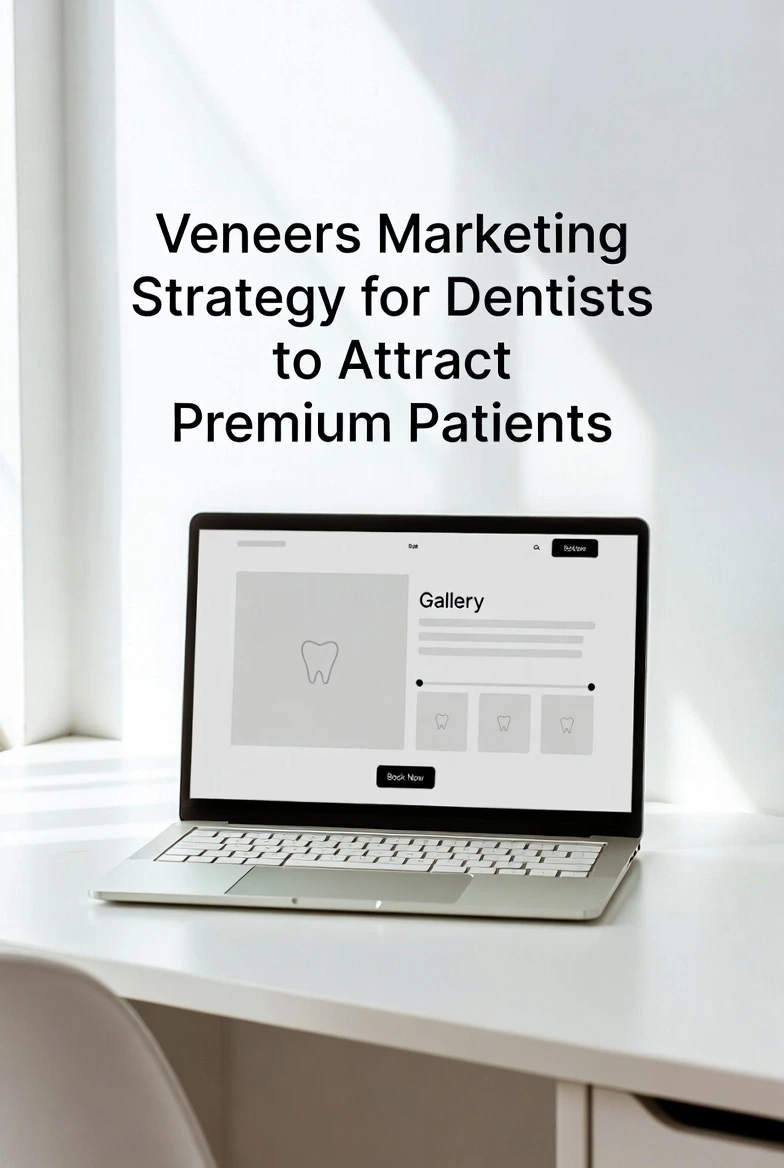 Most dentists don’t struggle to get veneer leads. They struggle to get the right veneer leads—patients who want natural-looking results, respect the process, and are prepared to invest in quality without turning every call into a price negotiation. Most dentists don’t struggle to get veneer leads. They struggle to get the right veneer leads—patients who want natural-looking results, respect the process, and are prepared to invest in quality without turning every call into a price negotiation.
This blog breaks down a veneers marketing strategy you can use across markets to generate booked cosmetic consultations and improve case acceptance. It connects ads and SEO to landing pages, front-desk handling, and measurable outcomes.
This framework is based on patterns our team at WEO Media - Dental Marketing sees across cosmetic campaigns. Veneer marketing rarely fails due to traffic volume—it fails when search intent, landing page expectations, and front-desk handling aren’t aligned. The goal of this guide is to map those links so you can diagnose where lead quality drops off and fix the specific bottleneck.
By the end, you’ll have a practical funnel map, a channel plan, and a KPI checklist you can use to evaluate performance and tighten execution.
TL;DR: If You Only Do 5 Things, Do These
| 1. |
Pick a premium position - Define what makes your veneer experience worth it: planning, aesthetics, comfort, transparency, and proof.
|
| 2. |
Build one high-converting veneers landing page - Gallery + process timeline + expectation management + financing framing + trust signals.
|
| 3. |
Launch high-intent Google Search campaigns - Veneers and smile makeover terms, with strong negatives to reduce low-fit clicks.
|
| 4. |
Train your team’s first conversation - The front desk and treatment coordinator should guide goals and concerns, not quote prices first.
|
| 5. |
Track booked consults (not just leads) - Measure cost per booked consult, show rate, and acceptance rate to find what’s actually working. |
What a Veneers Marketing Strategy Is (And Isn’t)
A veneers marketing strategy is a full system that attracts cosmetic-ready patients and moves them from interest to a booked consultation using the right channels (SEO, Google Ads, paid social, retargeting), the right assets (landing pages, creative, follow-up), and the right metrics (booked consults, show rate, acceptance).
It isn’t a single campaign or a discount offer. Veneers are a trust + visual decision. Your marketing has to create confidence and expectation alignment at every step—especially for patients who care deeply about how the result will look.
Why Veneer Prospects Hesitate (And How to Address It in Marketing)
Many veneer prospects hesitate for reasons that have nothing to do with your skill. The friction is often emotional risk. People worry about looking unnatural, regretting the investment, or feeling rushed into a decision.
Instead of glossing over that, strong marketing acknowledges it and shows how the practice reduces risk through planning and process clarity.
| • |
Fear: “I’ll look fake.” - Show natural-looking case examples and explain how shade and shape decisions are made.
|
| • |
Fear: “I’ll spend a lot and hate it.” - Explain preview steps (photos, planning, mock-ups) and how expectations are aligned before finalizing.
|
| • |
Fear: “I’ll be pressured to decide.” - Frame the consultation as evaluation + planning, not a sales meeting.
|
| • |
Hope: “I want to feel confident in photos and conversations.” - Share patient story themes (confidence, ease, smiling more) without promising outcomes. |
The “Premium Veneers Growth System” (A Simple Framework)
If agency terms feel abstract, here’s the plain-English version. This framework works because each step supports the next.
| 1. |
Define the ideal veneer patient - Who they are, what they care about, and what signals show they’re ready for a premium experience.
|
| 2. |
Clarify your message - What you do differently (planning, artistry, comfort, transparency) and how you prove it visually.
|
| 3. |
Present the consult the right way - “Offer architecture” means how you present the consult so you filter price shoppers without discounting.
|
| 4. |
Run the right channels - SEO + Google Ads + short-form video + retargeting, each with a specific job.
|
| 5. |
Build conversion assets - Landing page, follow-up, and call handling that answer concerns before patients ask.
|
| 6. |
Measure what matters - “Unit economics” means what a booked consult costs vs. what a case yields; track booked consults, show, acceptance. |
Mini-Stories: Small Changes That Often Make a Big Difference
These are anonymized, real-world patterns that show what tends to improve when the funnel is aligned. Results vary by market, competition, budget, and operations.
First, the “price shopping” problem. One practice had plenty of calls, but the front desk was fielding nonstop “How much are veneers?” conversations. They rebuilt their landing page to include a clear process timeline, natural-aesthetics proof, and a short “what veneers can and can’t do” section. Call volume wasn’t the main goal. Better-fit conversations were.
Second, the “no-show consult” problem. A practice adjusted its confirmation flow from generic reminders to a simple 3-message sequence sent over 48 hours. The messages addressed the most common fears: natural look, timeline, and what the consultation actually includes. The intent wasn’t to pressure anyone—just to increase clarity. Many teams find that better education reduces anxiety and improves attendance, but experiences vary.
Third, the “trust gap” problem. A practice standardized its before-and-after photos (same lighting, angles, and labeling). Their gallery started doing more of the heavy lifting than their ad copy, simply because patients could visualize outcomes more clearly.
Positioning Pillars (What to Say So You Attract the Right People)
Positioning isn’t about sounding expensive. It’s about communicating quality and reducing perceived risk in a way cosmetic patients recognize.
| • |
Planning - Explain how photos, smile design planning, and a step-by-step process create predictability.
|
| • |
Artistry - Talk about natural proportions, facial harmony, and “you-looking-like-you,” not generic perfection.
|
| • |
Comfort - Describe the experience: what the visits are like, how questions are handled, and how follow-ups work.
|
| • |
Transparency - Candidacy is evaluated; outcomes vary; expectations are co-designed before finalizing.
|
| • |
Proof - Cases, reviews, and consistent visual standards that show your aesthetic approach. |
Your Veneers Funnel: Ad → Landing Page → Consult → Follow-Up
Veneer marketing works when each stage answers the next question a cosmetic patient is thinking.
| • |
Ads - Use messaging that signals fit: natural aesthetics, planning, and clarity (without guarantees).
|
| • |
Landing Page - Convert curiosity into a confident next step with visuals and expectation management.
|
| • |
Consult - Align goals and constraints, confirm candidacy, and set realistic expectations.
|
| • |
Follow-Up - Nurture hesitation with proof and process clarity rather than repeated “checking in.” |
Channel Playbooks (How to Use Each Channel Without Wasting Spend)
Google Ads for Veneers
Google Search is where demand shows up with high intent. A practical win is matching ad intent to landing page sections.
Veneers keywords often split into two intent tiers: evaluation intent (comparing options and learning what veneers can do) and action intent (ready to book a consultation). Your campaign structure should reflect that, otherwise you’ll pay for clicks from people who are still researching and not ready to schedule.
Keyword themes also map to different stages. “Veneers” can be broad, “smile makeover” often signals a bigger aesthetic goal, and “cosmetic dentist veneers” can be closer to booking intent. Matching the ad’s promise to the exact landing page section is what improves lead quality, not just click-through rate. Negative keywords matter for the same reason: they prevent mismatched clicks that inflate costs and generate price-shopping calls.
| • |
Keyword Themes - Veneers, porcelain veneers, smile makeover, smile design, cosmetic dentist veneers (localized).
|
| • |
Negative Keywords - Remove low-fit intent like “cheap,” “DIY,” “free,” and unrelated research terms, tailored per market.
|
| • |
Ad Angles - Natural-looking results, planned approach, and consultation clarity (avoid guarantees).
|
| • |
Tracking - Call tracking and attribution to campaigns and pages, plus a “lead quality” note from the front desk. |
Dental SEO for Veneers (Local Demand, Premium Positioning)
SEO isn’t just rankings. It’s trust-building. Veneers patients read before they book.
For SEO, Google tends to reward pages that satisfy the full decision journey—definitions, comparisons, timeline, candidacy, and risk questions. That’s why veneer SEO performs best as a cluster, not a single “veneers page.” When related pages link to each other, they strengthen topical coverage and make it easier for patients to find the exact answers they need.
Local signals still matter because dental demand is local. Relevance, prominence, and proximity are influenced by GBP completeness, consistent service information, and review content. Premium proof elements often influence conversion more than rankings, but they still belong on your pages because they help visitors decide.
| • |
Core Pages - Veneers, smile makeover, cosmetic consultation, digital smile design, financing (compliant framing).
|
| • |
Support Content - Natural-looking veneers, veneers vs bonding, veneers vs crowns, veneer timeline, “what if something goes wrong.”
|
| • |
Local SEO Basics - Strong GBP media, consistent service categories, and review themes that reflect premium outcomes (natural look, comfort, clarity). |
Paid Social and Short-Form Video
Use social to build familiarity and proof, then let retargeting and search convert.
| • |
Creative Themes - Patient journey snippets, planning visuals, lab craftsmanship moments, and transformation stories.
|
| • |
Quality Controls - Strong landing pages and screening questions protect lead quality better than volume-first lead forms.
|
| • |
Retargeting - Gallery proof + risk-reduction messages aligned to common fears. |
Veneers Landing Page Checklist (What High-Converting Pages Usually Include)
A premium veneers landing page should feel like clarity, not hype. Each section exists to answer a specific question patients are silently asking.
For example, the gallery answers “Can you deliver a look I’d actually want?” The timeline answers “How does this work, and how many visits are we talking about?” Expectation management answers “What if I’m not a candidate, or what if my goals aren’t realistic?” Lab and materials details answer “What makes your results consistent?” Financing framing answers “Can I approach this in a manageable way?” Trust signals answer “How do I know this is safe to commit to?”
| 1. |
Above-the-fold clarity - Who it’s for, what the next step is, and why your approach is different (no guarantees).
|
| 2. |
Before-and-after gallery - Consistent standards and enough examples to show your “natural” aesthetic.
|
| 3. |
Step-by-step timeline - Consultation → planning → preparation/temporaries (if needed) → final placement → follow-up.
|
| 4. |
Expectation management - What veneers can and cannot solve; candidacy required; results vary.
|
| 5. |
Materials and lab collaboration - How shade/translucency choices are made and how quality is checked.
|
| 6. |
Financing section (compliant) - Options may be available; terms and approvals vary; personalized estimates after evaluation.
|
| 7. |
Trust signals - Reviews, credentials, technology visuals, and clear process descriptions.
|
| 8. |
Accessibility note - How to request accommodations for cosmetic consultations. |
Common Mistakes That Quietly Attract Price Shoppers
| • |
Sending veneers ads to a generic services page - Patients can’t see proof or process, so they default to price questions. Fix: route veneer traffic to a dedicated landing page with proof + timeline.
|
| • |
Skipping negative keywords - You pay for mismatched clicks that rarely become booked consults. Fix: add negatives weekly, especially “cheap,” “DIY,” and non-patient terms.
|
| • |
Inconsistent before-and-after photos - Low trust, even if the work is excellent. Fix: standardize angles, lighting, cropping, and labels across every case photo.
|
| • |
Ignoring no-show reduction - You can “generate leads” and still lose revenue through intake leakage. Fix: use a short confirmation sequence that explains the consult and answers fears.
|
| • |
Measuring CPL instead of cost per booked consult - Volume looks good while quality and revenue lag. Fix: report cost per booked consult alongside show rate and acceptance rate. |
What to Say About the Veneers Process (Without Risky Claims)
Marketing should explain the process clearly while staying realistic and compliant. Focus on what the practice does to support patients and align expectations rather than describing how anyone will feel.
| • |
Timeline clarity - Timing depends on case complexity and lab coordination; explain the general flow without promising exact dates.
|
| • |
Visit expectations - Outline typical visit types (consult, planning, placement, follow-ups) while noting variation.
|
| • |
Aftercare support - Emphasize guidance and follow-up availability rather than promising a specific recovery experience. |
Front Desk and Treatment Coordinator Guidance (Premium Conversations)
Cosmetic prospects often call with emotion first and logic second. Your team’s job is to guide, not to quote.
| • |
Start with goals - “What would you like to change about your smile?”
|
| • |
Name the concern - “Are you most worried about looking unnatural, the investment, or the process?”
|
| • |
Frame the consultation - Evaluation, candidacy, and planning—no pressure to decide that day.
|
| • |
Set expectations - Veneers are customized; outcomes vary; planning is how you align the final look. |
“What If” Questions Patients Ask (And You Should Answer Up Front)
When marketing answers these questions early, the consultation starts with more trust.
| • |
What if a veneer chips or breaks? - Options can include repair or replacement depending on the situation; policies and timelines vary by case.
|
| • |
What if the look isn’t what I imagined? - Planning, previews, and clear communication reduce mismatch risk; refinement options may exist depending on the plan.
|
| • |
What if I decide not to proceed? - A premium consultation should still feel valuable and educational, even if the patient chooses a different path. |
Compliance Notes for Veneers Advertising
Veneers marketing sits in a YMYL category, so credibility and caution matter.
| • |
Avoid guarantees - No promises about exact results, timelines, or “perfect” outcomes.
|
| • |
Use qualifying language - “May,” “can,” “often,” and “depends on candidacy” reduce risk.
|
| • |
Align with local rules - Advertising expectations can vary by jurisdiction and dental boards. |
KPIs to Track (So You Know What’s Actually Working)
Track what the practice can act on. Vanity metrics won’t help you scale predictably.
Leads are not the same as booked consults. Booked consult attribution often breaks when call tracking isn’t mapped to the correct landing pages and campaigns, or when forms aren’t tagged consistently. The other missing layer is qualitative: a simple front-desk tag like “price-first” or “natural look concern” can explain why one campaign converts better even when CPL is higher.
The most common tracking gap is that practices can see calls and forms, but not which ones turned into booked consults. Closing that loop is what makes optimization decisions straightforward.
| • |
Booked consults - The key conversion event for cosmetic funnels.
|
| • |
Show rate - Often reflects patient confidence and pre-visit communication quality.
|
| • |
Acceptance rate - Often reflects expectation alignment and consult consistency.
|
| • |
Cost per booked consult - More useful than cost per lead for premium service lines.
|
| • |
Lead quality notes - Simple tags like “price-first,” “natural look concern,” “timeline-driven” help optimize messaging. |
A Simple 30/60/90 Rollout Plan
| 1. |
Days 1–30 - Choose positioning pillars, build the landing page, set tracking, and align your team’s first conversation.
|
| 2. |
Days 31–60 - Launch Google Ads search, publish core SEO pages, standardize gallery visuals, and start retargeting.
|
| 3. |
Days 61–90 - Add nurture messaging, test creative angles, refine keywords, and optimize based on booked consults and acceptance trends. |
Conclusion
The fastest way to improve veneer marketing is to stop optimizing for lead volume and start optimizing for booked consult quality—message → landing page → front desk → follow-up. Start with one step: build or rebuild the veneers landing page so it answers the questions patients are already thinking, then send your highest-intent traffic there.
Measure booked consults first, then show rate and acceptance rate. Those three numbers create a clear story about what to fix next. Most bottlenecks show up as either intent mismatch (wrong traffic), weak proof (people don’t trust what they see), or intake leakage (the lead is good but the system drops it).
If you fix one bottleneck per month, premium lead quality improves over time.
FAQs
How do you market veneers without attracting bargain hunters?
Lead quality improves when you position veneers around planning, natural aesthetics, and transparency. Use negative keywords in paid search, build a landing page that sets expectations clearly, and train the front desk to guide goals and concerns before price conversations. Results vary by market and execution.
What should a veneers landing page include?
A strong veneers landing page usually includes a consistent before-and-after gallery, a step-by-step process timeline, expectation management (candidacy required; results vary), material and lab collaboration details, compliant financing framing, trust signals, and an easy way to request the next step.
What metrics matter most for veneer lead generation?
Booked consults, show rate, acceptance rate, and cost per booked consult typically give a clearer picture than clicks or raw leads. Tracking should connect calls and forms to campaigns and pages so you can improve messaging and lead quality over time.
How long does it take to see results from a veneers marketing strategy?
Paid search can begin producing inquiries sooner once tracking, landing pages, and call handling are in place. SEO often takes longer and depends on competition and site authority. Timelines vary by market, budget, and operational readiness. |
|