A Step-by-Step Guide to Auditing Dental SEO
Posted on 12/24/2025 by WEO Media |
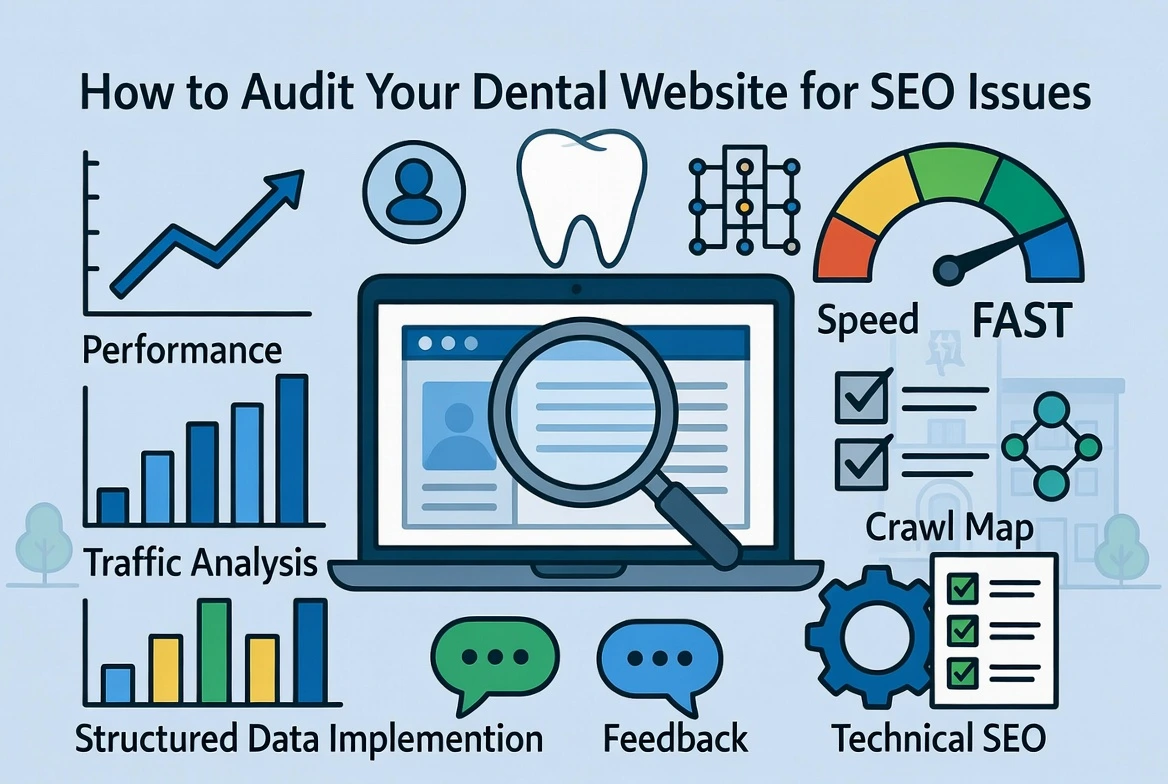 A comprehensive dental website SEO audit is essential for maintaining visibility, supporting search engine crawlability, and aligning your site with patient search behavior. Subtle issues—such as duplicate metadata, slow page speeds, or thin service descriptions—can significantly weaken your ability to rank for competitive dental keywords. A comprehensive dental website SEO audit is essential for maintaining visibility, supporting search engine crawlability, and aligning your site with patient search behavior. Subtle issues—such as duplicate metadata, slow page speeds, or thin service descriptions—can significantly weaken your ability to rank for competitive dental keywords.
As a long-standing authority in seo strategy for dental practices
, WEO Media - Dental Marketing offers perspectives shaped by industry-wide data and technical analysis. This guide distills those principles into a framework any practice or marketing professional can use to diagnose ranking barriers and strengthen long-term website performance.
Why Regular Dental Website SEO Audits Matter
Search engines continually adjust how they evaluate quality, relevance, and user experience. At the same time, patients increasingly rely on mobile devices and expect frictionless access to details about procedures, insurance, and scheduling.
Routine audits help uncover where a site may no longer meet modern standards—especially in areas like mobile performance, content depth, and page structure. Our dental marketing experts often observe that even small technical inconsistencies can influence how search engines perceive a site’s reliability and topical authority.
A structured audit helps determine whether your site aligns with search intent for terms such as “family dentist,” “dental implants,” or “teeth whitening,” while ensuring the experience supports patient decision-making.
Step 1 – Review On-Page SEO Elements
On-page SEO communicates topical relevance and page purpose to both search engines and patients. The highest-performing dental websites maintain clear structure, intentional keyword placement, and cohesive metadata.
Key elements to examine:
| • |
Title Tags & Meta Descriptions - Each page needs unique metadata that matches its primary search intent and accurately summarizes content.
|
| • |
Heading Structure (H1, H2, H3) - A single H1 per page clarifies topic focus, while nested headings guide both users and crawlers.
|
| • |
Keyword Mapping - Assign distinct keywords to each service page to avoid internal cannibalization.
|
| • |
Internal Linking - Strategic links help distribute authority and guide readers toward related services.
|
| • |
Duplicate Content Checks - Dental websites frequently reuse treatment explanations; search engines may interpret this as low-value content. |
Our dental marketing agency emphasizes relevance signals because they directly support page-level authority—particularly for services where search volume and competition are high.
Step 2 – Evaluate Technical SEO Performance
Technical SEO determines whether search engines can efficiently crawl, interpret, and index your content. Even well-written pages struggle to rank when technical barriers interfere with access or usability.
Evaluate the following elements:
| • |
Website Speed - Page load time affects both rankings and patient engagement; large images and scripts are common culprits.
|
| • |
Mobile Responsiveness - Google uses mobile-first indexing, making responsive layouts essential.
|
| • |
Broken Links & Redirect Chains - These disrupt navigation and reduce search engine trust signals.
|
| • |
XML Sitemap & Robots.txt Accuracy - A clean sitemap ensures correct indexing; robots.txt should not block important service pages.
|
| • |
Core Web Vitals - Metrics such as Cumulative Layout Shift and Largest Contentful Paint influence ranking and usability. |
Technical issues often accumulate over time—especially when design updates, new plugins, or staffing changes introduce unintended errors.
Step 3 – Analyze User Experience (UX) & Engagement
Google increasingly relies on behavioral indicators that reflect how effectively a website meets user intent. UX issues such as cluttered layouts or confusing navigation can cause high bounce rates and undermine ranking potential.
Key areas of a UX-focused audit:
| • |
Navigation & Menu Structure - Patients should locate core services, insurance details, and office information intuitively.
|
| • |
Readability - Clear spacing, concise paragraphs, and accessible typography improve engagement.
|
| • |
Visual Hierarchy - Important elements like procedures and location details should be immediately noticeable.
|
| • |
Mobile Interaction - Buttons, forms, and phone links must function seamlessly.
|
| • |
Conversion Path Clarity - User journeys should feel natural, not forced, with minimal friction. |
Our dental marketing company often sees ranking improvements when UX problems are addressed because search engines reward sites that satisfy user expectations.
Step 4 – Audit Dental Website Content Quality
High-quality, trustworthy content is central to modern dental SEO. Google’s focus on expertise, experience, authoritativeness, and trust makes content evaluation a critical part of the audit.
Assess the following:
| • |
Depth & Completeness of Service Pages - Pages should answer core patient questions, including procedure details, benefits, and recovery expectations.
|
| • |
Thin or Overlapping Pages - Consolidate or expand content that lacks unique value.
|
| • |
Local Relevance - Incorporate city and neighborhood references appropriately to support local rankings.
|
| • |
Tone & Consistency - Content should reflect clinical accuracy and remain patient-centered.
|
| • |
Educational Resources - FAQs, blogs, and guides help establish topical authority and support long-tail keyword visibility. |
Our dental marketing experts frequently observe that enriching service pages alone can produce measurable gains in both ranking breadth and user engagement.
Step 5 – Examine Local SEO & Google Business Profile Factors
Local SEO determines visibility within the map pack and nearby search results—the areas where dental practices gain the majority of new patient traffic. Algorithm updates continue to prioritize consistency, proximity, and community relevance.
Important components to review:
| • |
Google Business Profile Completeness - Accurate hours, categories, and descriptions signal reliability.
|
| • |
NAP Consistency - Name, address, and phone number must match across all directories.
|
| • |
Review Activity - Fresh reviews influence ranking and patient decision-making.
|
| • |
Local Content Signals - Location-based keywords and context help clarify service areas.
|
| • |
Map Pack Performance - Track your appearance for high-intent local terms and adjust strategy accordingly. |
Because search engines weigh proximity and data accuracy heavily, inconsistencies can quickly diminish your map rankings even if your website performs well.
Step 6 – Use Tools to Support Your SEO Audit
Industry-standard tools provide clarity on technical health, keyword performance, and user behavior. They also reveal deeper patterns that manual review may overlook.
Recommended tools include:
| • |
Google Search Console - Identifies coverage issues, indexing problems, and search query patterns.
|
| • |
Google Analytics - Highlights behavioral trends, engagement drop-offs, and top-performing pages.
|
| • |
Screaming Frog SEO Spider - Useful for scanning metadata, URLs, status codes, and duplicate content.
|
| • |
PageSpeed Insights - Provides Core Web Vitals data and performance diagnostics.
|
| • |
Ahrefs or SEMrush - Supports keyword research, backlink auditing, and competitive analysis. |
Data from these tools can guide prioritization, distinguish systemic issues from isolated ones, and inform long-term SEO strategy.
Step 7 – Prioritize Fixes Based on Impact
Not all SEO problems carry equal weight. After compiling audit findings, categorize issues by their potential influence on visibility, crawlability, and user engagement.
Typical high-impact areas include:
| • |
Slow Load Times - Strongly correlated with bounce rates and ranking volatility.
|
| • |
Thin or Duplicate Service Content - Reduces relevance and weakens topical authority.
|
| • |
Missing or Misaligned Metadata - Prevents search engines from understanding page purpose.
|
| • |
Broken Links & Redirect Chains - Create crawl inefficiencies.
|
| • |
Poor Mobile Usability - Affects both user satisfaction and algorithmic evaluation. |
A prioritized roadmap helps ensure that improvements meaningfully contribute to search performance rather than producing superficial changes.
FAQs
How often should a dental practice perform an SEO audit?
Most practices benefit from a full audit every 6–12 months. Search trends evolve, algorithms change, and website updates can introduce technical issues. Regular audits help maintain consistency, accuracy, and competitive visibility.
Which SEO issues affect dental rankings the most?
The most impactful issues typically include slow page speeds, thin or duplicate content, poor mobile performance, missing metadata, and inconsistencies in local listings. These factors directly affect how search engines assess relevance and reliability.
Can small SEO issues really prevent a dental website from ranking?
Yes. Elements such as duplicated title tags, oversized images, or a misconfigured robots.txt file can hinder indexing, reduce user satisfaction, and weaken page authority—ultimately preventing strong ranking performance. |
|