E-E-A-T for Dental Practices Explained
Posted on 1/1/2026 by WEO Media |
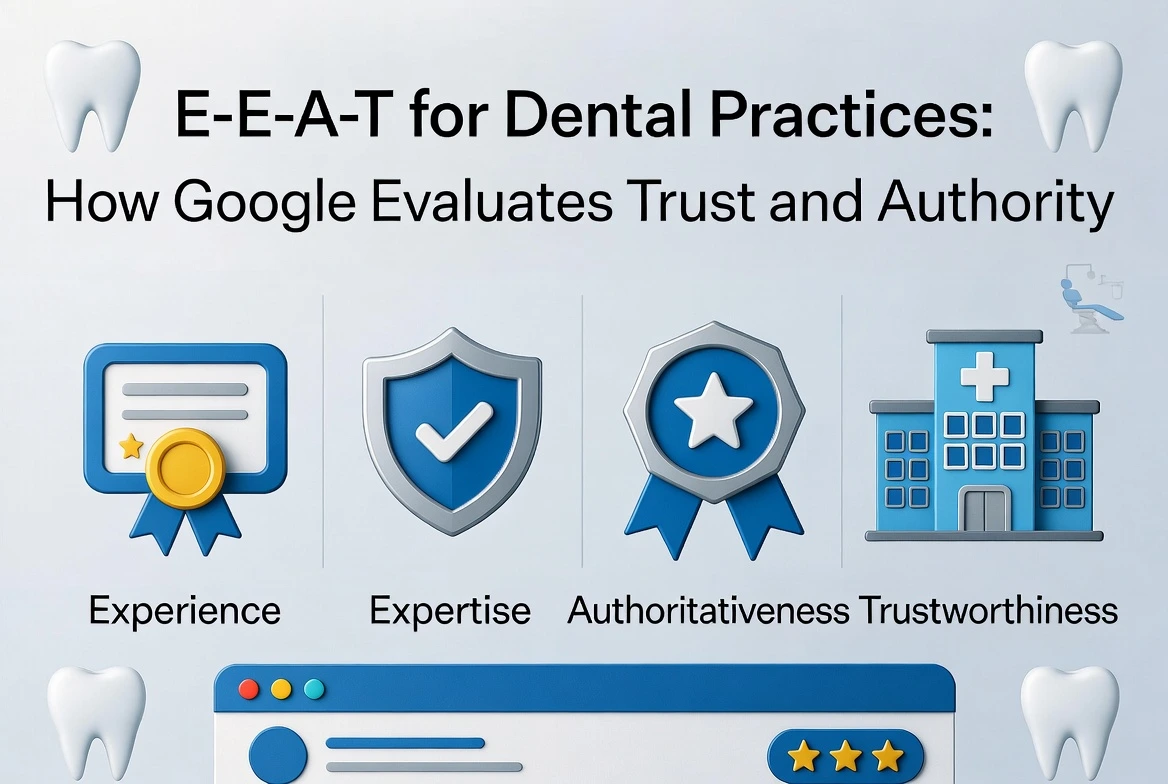 Google’s E-E-A-T framework—Experience, Expertise, Authoritativeness, and Trustworthiness—plays a defining role in how dental websites are evaluated and ranked. Because dentistry falls under the “Your Money, Your Life” category, Google applies stricter quality standards to ensure users receive safe, accurate, and reliable information. Google’s E-E-A-T framework—Experience, Expertise, Authoritativeness, and Trustworthiness—plays a defining role in how dental websites are evaluated and ranked. Because dentistry falls under the “Your Money, Your Life” category, Google applies stricter quality standards to ensure users receive safe, accurate, and reliable information.
In competitive dental markets, understanding how E-E-A-T works—and how to signal it effectively across your website—can significantly improve organic visibility. Drawing on insights developed by WEO Media - Dental Marketing, this guide explains how E-E-A-T applies specifically to dental websites and how practices can strengthen their authority through content, reputational signals, and site-wide trust elements.
What Google’s E-E-A-T Framework Means for Dental Websites
Google doesn’t score E-E-A-T numerically; instead, it uses these principles to assess content quality and whether a page is appropriate for users seeking professional healthcare information.
For dental practices, E-E-A-T is essential because users expect clinically accurate guidance. Google’s quality raters look for clear signals that content reflects the perspective of qualified professionals. They also assess whether the site demonstrates a strong reputation, cites credible sources, and provides transparency in ownership and intent.
Dental websites that communicate real-world clinical insight, offer precise explanations, and maintain user-focused structure typically satisfy both user expectations and algorithmic quality filters.
Experience: Demonstrating Firsthand Dental Knowledge
Google values content that reflects authentic, practical experience. For dental practices, this is often the easiest E-E-A-T component to demonstrate because your daily work inherently provides experiential authority.
Ways dental sites can showcase firsthand experience include:
| • |
Treatment Narratives - Explaining procedures through the lens of what patients commonly experience or ask.
|
| • |
Condition-Based Guidance - Providing insight into symptoms, etiologies, and clinical evaluation steps.
|
| • |
Realistic Expectations - Clarifying timelines, discomfort levels, or healing considerations based on actual cases. |
These forms of experience-driven content help Google identify that the information originates from professionals actively involved in patient care.
Expertise: Professional Credentials and High-Quality Clinical Content
Expertise is critical for dental websites. Google expects authors of medical and dental information to have appropriate training or credentials. While you should avoid overusing promotional phrasing, highlighting professional qualifications where relevant helps establish credibility.
High-quality dental content generally includes:
| • |
Clinically Accurate Explanations - Aligning procedure descriptions with accepted dental standards.
|
| • |
Evidence-Informed Information - Referencing professional guidelines or consensus where appropriate.
|
| • |
Clear Author Attribution - Listing educational backgrounds, credentials, or years of clinical experience in a non-marketing tone. |
Our dental marketing experts frequently observe that Google rewards pages where expertise is paired with readability and patient-centered clarity rather than jargon-heavy text.
Authoritativeness: Reputation Indicators Google Relies On
Authoritativeness extends beyond your website. Google looks for reputation signals across the web to understand how trustworthy your practice appears compared to others in the region.
Key signals include:
Our dental marketing company notes that algorithm updates increasingly emphasize entity-level reputation. This means Google evaluates your practice as an “entity” and compares its prominence and trustworthiness against competitors in your area.
Trustworthiness: The Core of E-E-A-T for Dental Sites
Trust is the strongest ranking component for medical and dental content. Even high-quality information can underperform if the website lacks essential trust indicators.
Foundational trust elements include:
| • |
Clear Contact Information - Including address, phone number, and transparent ownership details.
|
| • |
Secure Website Architecture - SSL certificates, privacy policies, and HIPAA-aligned form handling.
|
| • |
Up-to-Date Content - Regularly reviewing clinical information to ensure accuracy and consistency.
|
| • |
Accessible Patient Resources - Treatment costs, financing details, informed consent guidance, and aftercare instructions. |
Google’s evaluation emphasizes whether a patient would feel confident acting on the information presented. Accuracy, transparency, and safety messaging all contribute to that perception.
How High-Quality Content Helps Dental Practices Rank Better
Content remains the most visible place to express E-E-A-T. Pages that satisfy user intent—especially long-form guides, condition-based explanations, and treatment detail pages—tend to earn higher engagement metrics, which indirectly support rankings.
A strong dental content strategy typically includes:
| • |
Treatment Pages - Focused on specific procedures such as implants, crowns, emergency care, or orthodontics.
|
| • |
Patient Education Resources
- Articles explaining symptoms, prevention, or recovery needs.
|
| • |
FAQ Sections - Answering common questions with clear, medically consistent information.
|
| • |
Local SEO Optimization
- Incorporating geographic relevance to compete within your service area. |
To build lasting authority, dental practices should aim for depth, accuracy, and clarity rather than volume. Search engines increasingly reward sites that organize information logically and demonstrate a commitment to reliable patient education.
Reputation, Reviews, and Off-Site Signals
Google cross-references signals beyond your website to evaluate trust and relevance. Because dental services carry medical implications, off-site reputation carries more weight than in most local industries.
Important considerations include:
| • |
Review Diversity - A mix of Google, Healthgrades, Yelp, and Facebook reviews provides signal consistency.
|
| • |
Consistent NAP Information - Exact matching of practice name, address, and phone number across directories.
|
| • |
Engagement Indicators - Responses to reviews, transparent handling of feedback, and clear patient communication. |
These signals help Google validate that your practice provides quality care and that the information on your site reflects real-world patient experiences.
Practical Steps to Strengthen E-E-A-T on a Dental Website
Below are actionable strategies dental practices can implement to improve E-E-A-T alignment without veering into promotional language:
| 1. |
Create author bios that neutrally list credentials, experience, and professional affiliations.
|
| 2. |
Develop in-depth, patient-focused resources for high-intent keywords such as “dental implants,” “gum disease treatment,” or “emergency dentist.”
|
| 3. |
Add review schema, location schema, and author schema to strengthen structured data signals.
|
| 4. |
Ensure clear edit dates, medical accuracy checks, and transparent page ownership.
|
| 5. |
Build local citations and maintain consistent directory information across platforms.
|
| 6. |
Monitor and respond to online reviews to reinforce perceived trust. |
These steps help create an ecosystem of trust—something Google prioritizes when ranking healthcare content.
Conclusion: Building Long-Term Authority Through E-E-A-T
Dental practices that understand and apply Google’s E-E-A-T principles naturally strengthen their organic presence. While no single element guarantees higher rankings, consistent effort across content quality, site structure, transparency, and off-site reputation collectively builds strong authority over time.
Our dental marketing agency, WEO Media - Dental Marketing, emphasizes that lasting search visibility comes from demonstrating genuine clinical expertise, maintaining high-quality patient resources, and ensuring trust signals are reinforced throughout your digital footprint. When done correctly, E-E-A-T becomes not just an SEO framework, but a foundation for a more credible and patient-centered online presence.
FAQs
Why is E-E-A-T especially important for dental websites?
Dental practices fall under Google’s “Your Money, Your Life” category, meaning the information they publish can impact a person’s health and well-being. Because of this, Google applies stricter quality standards. E-E-A-T helps search engines determine whether a dental site is trustworthy, medically accurate, and safe for users to rely on when making care decisions.
Does Google score E-E-A-T directly?
No. E-E-A-T is not a direct ranking factor with a numerical score. Instead, Google uses these principles to evaluate content quality and determine whether a page meets user expectations, especially for medical topics. The search algorithm and quality raters assess signals that indicate expertise, experience, authority, and trust.
How can a dental practice improve its authority online?
Authority improves when a practice demonstrates clinical expertise, publishes accurate educational content, and earns positive reputation signals across the web. This includes high-quality reviews, consistent directory listings, author credentials, and citations from reputable third-party sources such as local publications or professional organizations.
What type of content strengthens E-E-A-T for dental SEO?
Detailed treatment pages, condition guides, procedural explanations, and robust FAQ sections all support E-E-A-T. Content that reflects real clinical experience, provides patient-centered clarity, and aligns with accepted dental standards performs best in search results.
Can reviews impact how Google evaluates trust?
Yes. Reviews act as external trust signals. A consistent pattern of authentic, positive reviews across multiple platforms helps Google confirm that a dental practice provides reliable care. Responding professionally to feedback further supports trustworthiness. |
|